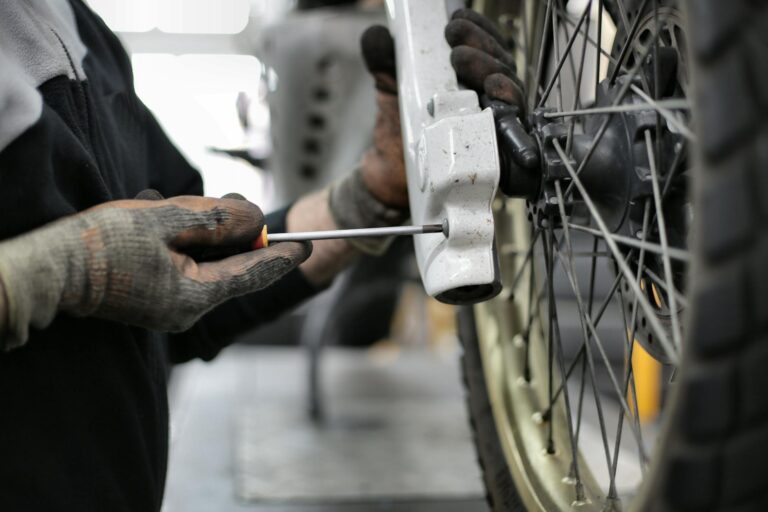
The bike multi-tool you actually need should have a set of 4, 5, and 6mm hex wrenches, a Phillips screwdriver, and a T25 Torx bit. That covers roughly 90 percent of trailside and roadside repairs on a modern bicycle. Everything beyond those five implements is either a nice-to-have or dead weight, depending on the specific bolts on your bike. A rider on a standard road or gravel bike with rim brakes and a two-bolt stem could get away with a tool carrying just three hex sizes.
Someone on a full-suspension mountain bike with a dropper post, disc brakes, and a direct-mount derailleur hanger will need closer to a dozen functions to feel genuinely prepared. This guide breaks down which tools belong on every multi-tool, which ones matter only for specific setups, and which are marketing filler that adds bulk without purpose. We will look at how multi-tools differ from each other in meaningful ways, what size and weight tradeoffs actually look like in practice, and where a cheap multi-tool falls short versus a more expensive one. We will also cover the tools that do not belong on a multi-tool at all because they work better as standalone items in your saddle bag.
Table of Contents
- What Tools Does Every Cyclist Actually Need on a Multi-Tool?
- How Multi-Tool Size and Weight Affect What You Carry
- Why Hex Wrench Quality Varies More Than You Would Expect
- Chain Tools and Tire Levers — Worth the Bulk or Better Standalone?
- Common Multi-Tool Mistakes and What They Cost You
- Matching Your Multi-Tool to Your Riding Style
- Where Multi-Tools Are Headed
- Conclusion
- Frequently Asked Questions
What Tools Does Every Cyclist Actually Need on a Multi-Tool?
The non-negotiable core is a 4mm hex, a 5mm hex, and a 6mm hex. The 5mm alone handles seat post clamps, stem bolts, water bottle cage bolts, and most brake caliper mounting bolts. The 4mm covers brake lever clamp bolts, derailleur limit screws on some models, and older cable pinch bolts. The 6mm handles some crank bolts, rear axle bolts on older quick-release frames, and certain pedal-related fasteners. A Phillips head screwdriver is needed for derailleur limit screws on Shimano groupsets and for some fender and rack mounting hardware. The T25 Torx has become essential because disc brake rotor bolts universally use that size, and many newer stems and handlebar clamps have switched to Torx as well.
Beyond those five, the next tier of usefulness includes a 2.5mm hex for front derailleur cable pinch bolts and some shifter clamps, a 3mm hex for older brake pad adjustment, and an 8mm hex for crank arm bolts on certain square taper and Hollowtech systems. A chain tool is genuinely useful if you ride far from civilization, but it needs to actually work, and many multi-tool chain breakers are so flimsy that they bend the pin instead of pushing it through. The Crank Brothers M19, for example, has a chain tool that functions reasonably well, while many generic multi-tools include one that will frustrate you when you need it most. A flat-head screwdriver shows up on almost every multi-tool, and in thirty years of riding I have used one on a bike exactly twice. Spoke wrenches appear on many multi-tools in a single size, which is only helpful if that size matches your wheels. Most road bikes use 3.23mm nipples, while many mountain bikes use 3.45mm. Check yours before assuming the spoke wrench on your tool is anything more than a protrusion that snags your jersey pocket.
How Multi-Tool Size and Weight Affect What You Carry
The weight difference between a minimal 6-function tool and a loaded 19-function tool is typically between 80 and 220 grams. That gap matters less than you think for the tool itself, but it matters quite a bit for how willingly you bring it along. A compact tool like the Topeak Mini 9 fits in a jersey pocket without creating an annoying lump. A Lezyne RAP II 25 is an excellent tool, but it is large enough that it really belongs in a saddle bag or frame bag. If the tool is uncomfortable to carry, you will leave it at home on shorter rides, and shorter rides are exactly when you feel invincible enough to skip preparation. However, if you ride primarily mountain bike trails or long gravel routes, a larger multi-tool with a chain breaker and tire lever pays for its weight in peace of mind.
The calculation changes if you ride in groups where someone else probably has a chain tool, or if you stay within cell service range where a pickup is a phone call away. Riders doing solo backcountry bikepacking on a loaded rig should lean toward a more comprehensive tool because the cost of being stranded with a broken chain and no way to fix it is measured in hours, not grams. Weight also affects build quality in ways that are not always obvious. Stamped steel tools are heavier but more durable under torque. Forged or CNC-machined tools in stainless steel or chrome vanadium cost more and weigh more, but they resist rounding out bolt heads. Lightweight tools that achieve low weight through thinner material or aluminum bits can strip more easily, particularly the smaller hex sizes that already concentrate force on a tiny contact patch.
Why Hex Wrench Quality Varies More Than You Would Expect
Not all 5mm hex keys are created equal. The fit between a hex wrench and a bolt head has a tolerance, and cheap multi-tools tend to have sloppy tolerances that result in a loose fit. A loose-fitting hex wrench rounds out bolt heads over time, especially stainless steel bolts, which are softer than the chrome vanadium steel used in the wrench. This is not a theoretical concern. I have personally rounded out a stem bolt with a no-name multi-tool purchased at a gas station, turning a two-minute adjustment into a thirty-minute ordeal involving vice grips. The Topeak Mini series, Crank Brothers, Lezyne, and Wolf Tooth all manufacture hex bits with tight enough tolerances to inspire confidence when torquing bolts.
The Wolf Tooth 8-Bit Pack Pliers system takes a different approach entirely, using individual bit inserts that are full-sized rather than folding, which gives you the feel of a proper workshop hex key. The tradeoff is that the bits are loose pieces you could drop in tall grass or lose from an unzipped bag. Another factor is lever length. Folding multi-tools give you a handle that is typically 80 to 100mm long. That is enough to loosen and tighten most bolts adequately but not enough to break free a seized bolt or achieve proper torque on a critical fastener like a crank arm bolt. For that reason, some riders carry a multi-tool for common adjustments and a single full-length 5mm hex wrench for the bolts that matter most. It sounds redundant until the first time you are standing on the trail trying to tighten a loose stem bolt with a tool that gives you no leverage.

Chain Tools and Tire Levers — Worth the Bulk or Better Standalone?
Chain tools on multi-tools represent the widest quality gap of any included function. A good one, like the one on the Crank Brothers M19 or the Topeak Alien series, will push a pin cleanly through an 11 or 12-speed chain without bending. A bad one will flex under pressure, slip off the pin, and mangle the link. The problem is that you cannot tell which category your chain tool falls into until you actually need it, and that is the worst possible time to find out. If you buy a multi-tool that includes a chain tool, test it at home on an old chain before trusting it on a ride. Tire levers integrated into multi-tools are almost universally mediocre. They are too short, too thick, or positioned at an angle that makes them awkward to hook under a tire bead.
Standalone tire levers like the Pedro’s or Park Tool set weigh almost nothing, cost a few dollars, and work dramatically better. The only exception is the Lezyne multi-tools that include actual separate lever attachments that snap onto the body of the tool, which perform closer to a dedicated lever. The tradeoff comes down to consolidation versus function. Carrying a multi-tool with a chain breaker and tire levers means one object in your bag. Carrying a simpler multi-tool plus standalone levers and a standalone chain tool means three objects but better performance from each. For a jersey pocket rider who wants minimal bulk, the all-in-one approach wins on convenience. For a saddle bag rider who has room, the separates approach wins on reliability.
Common Multi-Tool Mistakes and What They Cost You
The most frequent mistake is buying a multi-tool based on the number of functions advertised on the package rather than on which specific functions are included. A 20-function tool that includes four spoke wrench sizes, two screwdriver heads you will never use, and a bottle opener is less useful than a 10-function tool with the right hex sizes, a Torx bit, and a working chain tool. Count the tools you need, not the tools they list. The second mistake is never checking your multi-tool against your actual bike. Bikes from different eras and manufacturers use different bolt sizes and head types. A bike with SRAM components and a Torx-heavy cockpit has different needs than a Shimano-equipped bike with traditional hex bolts. Sit down with your bike and your multi-tool for ten minutes.
Touch the tool to every bolt on the bike and note which ones fit and which ones do not. You may discover you are carrying tools you do not need while missing one that you do. A less obvious mistake is storing a multi-tool loose in a bag where it can rattle around, collect moisture, and develop rust on the pivot points. A rusted multi-tool becomes stiff to unfold, and stiff tools are ones you avoid using. A small zip-lock bag or a neoprene sleeve keeps the tool clean. Some higher-end tools like those from Wolf Tooth or Silca come with carrying cases that add minimal weight and prevent this problem entirely. Riders in wet climates should oil the pivots once a season at minimum.
Matching Your Multi-Tool to Your Riding Style
A road cyclist doing group rides within 30 miles of home needs the least: a compact tool with 4, 5, and 6mm hex wrenches, a Phillips driver, and a T25 Torx. Something like the Topeak Mini 9 Pro or the Lezyne RAP II 6 fits a jersey pocket and covers the most likely adjustments.
A mountain biker doing technical trail rides solo should step up to a tool with a chain breaker, spoke wrench in the correct size for their wheels, and possibly an 8mm hex if their crank requires it. A bikepacker or touring cyclist on multi-day rides in remote areas should carry the most comprehensive tool available and supplement it with a standalone tire lever set and a spare master link.
Where Multi-Tools Are Headed
The shift toward Torx bolts across the cycling industry means multi-tools will increasingly need T10, T20, T25, and T30 bits rather than the hex-dominated layouts of the past decade. Some manufacturers are already responding.
The Wolf Tooth 8-Bit system and Topeak’s modular tools let riders swap bit inserts so the same chassis can adapt to different bolt standards as bikes evolve. Tubeless tire repair tools, including plug kits, are also starting to appear as integrated multi-tool accessories, reflecting how many riders now run tubeless setups and need a way to handle punctures that sealant cannot close. The multi-tool of five years from now will likely look meaningfully different from what most of us carry today, and modularity is the clearest path to keeping a single tool relevant across bike generations.
Conclusion
A good bike multi-tool does not need to do everything. It needs a 4mm hex, a 5mm hex, a 6mm hex, a Phillips screwdriver, and a T25 Torx bit. Those five tools solve the vast majority of mechanical issues you will encounter during a ride. Beyond that core, let your specific bike, your typical ride distance, and your proximity to help determine whether you need a chain breaker, spoke wrench, or additional Torx sizes. Test your tool against every bolt on your bike before you ride with it, and test any chain tool at home before trusting it in the field.
Resist the temptation to buy the tool with the highest function count. Buy the tool with the right functions, built well enough to actually work when your hands are cold and your patience is short. A ten-dollar multi-tool with sloppy hex bits will cost you more in rounded bolts and frustration than a forty-dollar tool with precise fittings. Carry it on every ride, keep it dry, and check it against your bike whenever you change components. That is the entire strategy.
Frequently Asked Questions
How many tools do I really need on a bike multi-tool?
For most riders, five core functions cover about 90 percent of needs: 4mm hex, 5mm hex, 6mm hex, a Phillips screwdriver, and a T25 Torx. Mountain bikers and bikepackers should add a chain tool and a spoke wrench in the size that matches their wheels.
Are expensive multi-tools actually better than cheap ones?
The main difference is hex bit precision and durability. Cheap tools have loose-fitting bits that round out bolt heads over time. Tools from Crank Brothers, Lezyne, Topeak, and Wolf Tooth use tighter tolerances and harder steel. The jump from a ten-dollar tool to a thirty-dollar tool is significant. The jump from thirty to sixty dollars has diminishing returns unless you need a specialty feature.
Do I need a chain tool on my multi-tool?
If you ride solo more than 15 miles from a trailhead or town, yes. If you ride in groups and stay on popular routes, a chain tool is nice to have but not critical. When you buy a multi-tool with a chain breaker, test it on an old chain at home to confirm it works before relying on it during a ride.
Should I carry a multi-tool or individual hex wrenches?
A multi-tool is more practical for carrying during rides because it consolidates everything into one object. Individual hex wrenches provide better leverage and feel, which matters for workshop use but is less important for trailside adjustments. Some riders carry both a multi-tool and a single full-length 5mm hex wrench for stem and seat clamp bolts that need more torque.
What is the most overlooked tool on a bike multi-tool?
The T25 Torx bit. Many older multi-tools do not include one, but disc brake rotors universally require it, and an increasing number of stems and handlebars use Torx bolts. If your multi-tool lacks a T25, you cannot adjust your disc brakes or tighten a loose rotor bolt during a ride.
How do I know which spoke wrench size I need?
Check your wheel’s spoke nipples. Most road bikes use 3.23mm nipples, while many mountain bike wheels use 3.45mm. DT Swiss Pro Lock nipples use a Torx interface instead. Bring your wheel to a bike shop or try a spoke wrench set at home to identify the correct size before assuming the spoke wrench on your multi-tool is the right fit.