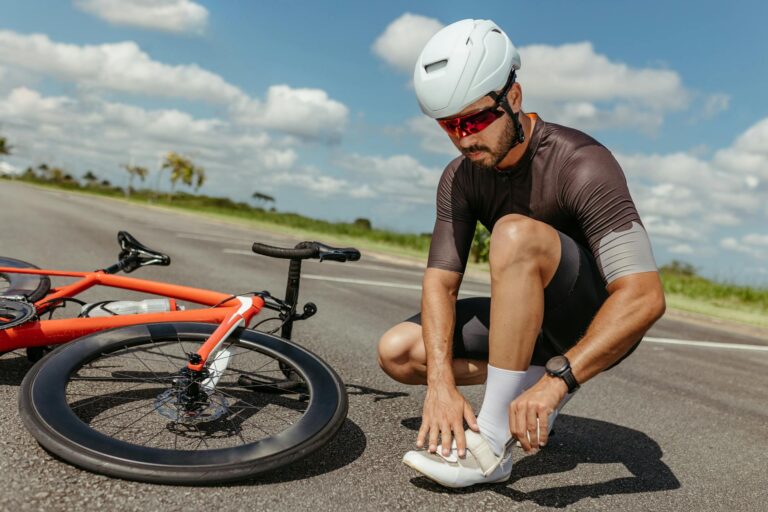
The most effective reflective gear for bike commuting combines retroreflective materials on moving parts of your body””ankles, wrists, and pedals””with strategically placed reflective elements on your torso and bike frame. This approach works because drivers’ headlights create a distinctive “biomotion” pattern when light bounces off reflective ankle bands on a cyclist’s pumping legs, a visual signal that the human brain recognizes as a person far more quickly than a static reflective patch on a backpack. A cyclist wearing reflective ankle straps is visible from roughly 700 feet away, compared to just 200 feet for someone wearing only a reflective vest, according to research conducted at Clemson University. Reflective gear functions fundamentally differently from lights or bright clothing. While a fluorescent yellow jacket increases daytime visibility, it becomes nearly useless after dark without a light source shining on it.
Retroreflective materials contain thousands of tiny glass beads or prismatic elements that bounce light directly back toward its source””which means a driver’s headlights illuminate you and return that light straight to their eyes. This article covers the science behind effective reflective placement, the differences between reflective technologies, how to layer gear for maximum coverage, common mistakes that undermine visibility, and how to maintain reflective properties over time. Understanding reflective gear also means accepting its limitations. Reflective materials only work when light hits them, which means they provide no visibility benefit against drivers approaching from the side at an unlit intersection or against distracted drivers who never look your way. Treating reflective gear as one layer in a comprehensive visibility system””not a complete solution””is essential for safe commuting.
Table of Contents
- What Makes Reflective Gear Effective for Bike Commuters?
- Types of Reflective Technology and Their Performance Differences
- Where to Position Reflective Gear on Your Body and Bike
- Balancing Reflective Gear with Active Lighting Systems
- Common Mistakes That Undermine Reflective Visibility
- Seasonal Considerations for Reflective Commuting Gear
- The Future of Reflective Technology for Cyclists
- Conclusion
What Makes Reflective Gear Effective for Bike Commuters?
The effectiveness of reflective gear depends on three factors: the reflectivity rating of the material, where it sits on your body, and how much surface area it covers. Industrial reflective standards measure brightness in candelas per lux per square meter, with most cycling-specific gear falling between 300 and 500 cd/lx/m². Higher-end safety gear designed for roadside workers often exceeds 700 cd/lx/m², which explains why dedicated reflective vests outperform the token reflective strips sewn onto many cycling jackets. Placement matters more than most cyclists realize.
Research published in the journal Accident Analysis and Prevention found that reflective markers positioned on joints””ankles, knees, wrists, and elbows””allowed drivers to recognize a cyclist’s presence 40% sooner than reflective materials placed only on the torso. The explanation lies in how human vision processes motion: our peripheral vision is particularly sensitive to biological motion patterns, and the rhythmic movement of reflective ankle bands creates an unmistakable human signature that a static reflective panel cannot replicate. For practical commuting, this means a cheap pair of reflective ankle straps delivers more visibility benefit per dollar than an expensive jacket with small reflective logos. A rider testing this principle found that adding $12 worth of reflective Velcro straps to their ankles and wrists produced more driver reactions””earlier lane changes, reduced passing speed””than their $180 cycling jacket with integrated reflective piping.

Types of Reflective Technology and Their Performance Differences
Three main reflective technologies dominate the cycling market: glass bead retroreflectives, microprismatic retroreflectives, and the newer flexible prismatic films. Glass bead materials, the oldest and most common technology, embed microscopic glass spheres in a reflective backing. They remain the standard for most cycling apparel due to their low cost and ability to survive washing and flexing. However, glass bead materials lose roughly 30% of their reflectivity when wet, a significant drawback for commuters in rainy climates. Microprismatic materials, which use tiny corner-cube prisms instead of glass beads, maintain better wet-weather performance and offer higher brightness ratings.
The 3M Scotchlite Diamond Grade material used in premium safety vests delivers nearly double the reflectivity of standard glass bead products. The tradeoff is cost and durability””microprismatic films crack more easily when repeatedly folded, making them poorly suited for soft goods like gloves or shoe covers but excellent for hard surfaces like helmet shells or frame-mounted reflectors. Flexible prismatic films represent a middle ground, offering prism-level brightness with improved bend tolerance. Products using these materials cost two to three times more than basic reflective options. However, if your commute involves extended stretches of unlit roads with high-speed traffic, the investment in higher-grade reflective materials provides meaningful additional recognition distance. A rider visible at 800 feet instead of 500 feet gives a driver traveling at 55 mph an extra 3.3 seconds of reaction time””enough to change lanes rather than brake hard.
Where to Position Reflective Gear on Your Body and Bike
The highest-priority zones for reflective gear are your lower legs and feet, followed by your arms and hands, then your torso and back. Reflective ankle bands or reflective strips on your shoes should be considered mandatory equipment for night commuting. The pedaling motion creates that crucial biomotion signal while positioning the reflective material in the direct path of headlights, which illuminate low before high as a vehicle approaches. Moving up the body, reflective wrist bands or gloves with reflective elements add another layer of motion-based visibility while serving a secondary function: they make hand signals visible. A cyclist attempting a left-turn signal at night without reflective gloves is essentially invisible to approaching drivers.
Reflective tape on helmet surfaces catches light effectively due to the helmet’s height and angle, though the static position means it contributes less to recognition than moving elements. On the bike itself, spoke reflectors remain valuable despite their unglamorous reputation. The spinning wheel creates a distinctive visual pattern that clearly signals “bicycle” to approaching drivers. Pedal reflectors””required by law in many jurisdictions but often removed or lost””provide the same benefit. Frame-mounted reflectors lose effectiveness when panniers, fenders, or frame bags block their sightlines, so commuters with loaded bikes should compensate by adding reflective tape to bag surfaces and fender edges. A 10-foot roll of reflective tape costs under $15 and can transform a stealth-black commuter setup into a reasonably visible one.

Balancing Reflective Gear with Active Lighting Systems
Reflective gear and active lights serve complementary rather than competing functions. Lights make you visible from any angle and in any lighting condition, while reflective gear amplifies your visibility specifically to drivers whose headlights are pointed at you””typically the approaching traffic most likely to strike you. The combination outperforms either approach alone, but understanding the tradeoffs helps optimize your setup. Front and rear lights should always take priority over reflective gear in your visibility budget. A cyclist with a strong rear blinker and no reflective gear is safer than one with full reflective coverage and no lights.
Reflective materials cannot alert a driver behind you on a curve before their headlights sweep around to illuminate you, whereas a rear light pulses visibly regardless of headlight angle. Once adequate lighting is established, reflective gear extends your visibility envelope, particularly for side-approaching traffic and for amplifying your presence to distracted drivers who might otherwise dismiss a small light in their peripheral vision. The integration between lights and reflective gear matters too. Amber side-visibility reflective elements complement white front and red rear lights by adding lateral conspicuity. Some commuters mount small, spoke-mounted reflectors that spin into visibility when illuminated from the side. Others apply reflective tape to helmet sides, crank arms, or even the sidewalls of tires””anywhere that might catch a cross-street driver’s headlights during those vulnerable intersection moments.
Common Mistakes That Undermine Reflective Visibility
The most frequent error cyclists make with reflective gear is over-relying on the token reflective elements integrated into regular cycling apparel. A two-inch reflective strip on the back of a cycling jacket may meet a marketing claim but provides negligible real-world visibility compared to a full reflective vest or properly positioned ankle bands. Cyclists wearing such gear often feel more visible than they actually are, potentially leading to riskier behavior based on false confidence. Positioning failures account for another major category of reduced effectiveness. A reflective messenger bag that hangs on your back becomes invisible when you hunch over the handlebars, presenting only dark jacket fabric to following drivers. Reflective elements on the front of a jacket provide minimal benefit since approaching drivers already see your headlight””it’s the rear and side visibility that reflective gear needs to address.
Similarly, loose reflective sashes that rotate or slide during riding may end up positioned uselessly under an arm or bunched at the waist. Maintenance neglect gradually erodes reflective performance in ways cyclists may not notice. Dirt and grime accumulation can reduce reflectivity by 50% or more. Salt residue from winter roads is particularly damaging. Washing reflective garments according to manufacturer instructions””typically cold water, no fabric softener, hang dry””preserves reflective properties significantly longer than standard laundry treatment. When reflective strips begin to crack, peel, or lose their brightness, replacement rather than continued use is the responsible choice.

Seasonal Considerations for Reflective Commuting Gear
Winter commuting presents unique reflective challenges beyond the obvious increase in dark-hours riding. Heavy jackets and rain gear often cover the reflective elements on lighter base layers. Gloves thick enough for cold weather rarely offer the same reflective coverage as lightweight summer cycling gloves.
The solution requires building outer layers with their own reflective properties rather than relying on reflective inner garments. A Seattle commuter preparing for winter added a reflective Sam Browne belt””the diagonal sash worn by crossing guards and police officers””over their rain jacket after realizing their summer reflective cycling shirt was buried under multiple layers. The belt’s X-pattern front and back configuration maintained visibility regardless of their layering choices underneath, and it cost under $20. For extreme cold requiring bulky mittens, reflective slap bands wrapped around the wrist or forearm provide the motion-based visibility that disappears when reflective glove elements get swapped out for warmer options.
The Future of Reflective Technology for Cyclists
Emerging materials and designs are addressing long-standing limitations in cycling reflective gear. Flexible electroluminescent panels that combine passive reflection with active light emission are entering the market, though battery life and durability remain concerns for daily commuters. More practical near-term improvements include wider adoption of prismatic materials in soft goods as manufacturing costs decrease, and better integration of reflective elements into mainstream cycling apparel rather than dedicated safety products.
The fundamental principle, however, remains unchanged: visibility depends on light reaching a driver’s eyes, and reflective gear only works when headlights illuminate it. No technological improvement eliminates the need for active lights, proper positioning, and layered visibility strategies. Commuters who understand reflective gear’s genuine capabilities and limitations can deploy it effectively as part of a comprehensive approach to being seen””rather than treating it as a magic solution to nighttime riding risks.
Conclusion
Effective reflective gear for bike commuting prioritizes placement on moving body parts””especially ankles and wrists””over total surface area or garment cost. The biomotion effect created by reflective ankle bands provides faster driver recognition than any static reflective panel, while higher-grade microprismatic materials extend visibility distance in critical situations. Combining these principles with proper layering over active lighting systems creates a visibility approach that addresses threats from multiple angles. Building your reflective kit doesn’t require massive investment.
Start with reflective ankle straps and wrist bands, add reflective tape to your helmet and bag surfaces, and ensure your bike retains its wheel and pedal reflectors. Evaluate your outer layers for adequate coverage, especially for rainy and winter conditions when base layers disappear under shells. Maintain reflective surfaces by keeping them clean and replacing degraded elements. The goal is consistent, reliable visibility that doesn’t depend on drivers actively looking for cyclists””because too often, they aren’t.