For most toddlers, balance bikes are the better choice. Research published in PMC surveying parents of 173 children aged 4-6 found that children who practiced with balance bikes started learning at a younger age, required shorter practice duration, and achieved independent cycling earlier than those using training wheels. A 2023 study in Pediatric Physical Therapy reinforced this finding, showing that balance bike users transitioned to pedal bikes an average of six months earlier than their training-wheel counterparts. The data points toward a clear winner, though the margin of that victory depends heavily on your child’s age, physical development, and your family’s circumstances. Consider a typical scenario: a three-year-old on a balance bike spends weeks scooting around the driveway, feet grazing the ground, gradually lifting them for longer glides.
By contrast, a child the same age on training wheels pedals confidently but leans heavily to one side, never actually learning to balance because the auxiliary wheels catch every wobble. When the training wheels come off, that child essentially starts from scratch. This fundamental difference in how each method teaches explains why balance bikes have captured nearly half the global market, with North America accounting for 48.14 percent of balance bike sales in 2024. This article examines the research behind both methods, breaks down the costs and practical considerations, and helps you determine which approach suits your child. We will also address common concerns parents raise about each option and outline what to expect during the transition to a pedal bike.
Table of Contents
- What Do Balance Bikes and Training Wheels Actually Teach Toddlers?
- Why Research Favors Balance Bikes for Early Learners
- The Weight Factor: Why Lighter Bikes Matter for Small Children
- What Balance Bikes and Training Wheels Actually Cost
- Common Mistakes Parents Make with Both Methods
- The Growing Balance Bike Market
- When to Transition and What to Expect
- Conclusion
What Do Balance Bikes and Training Wheels Actually Teach Toddlers?
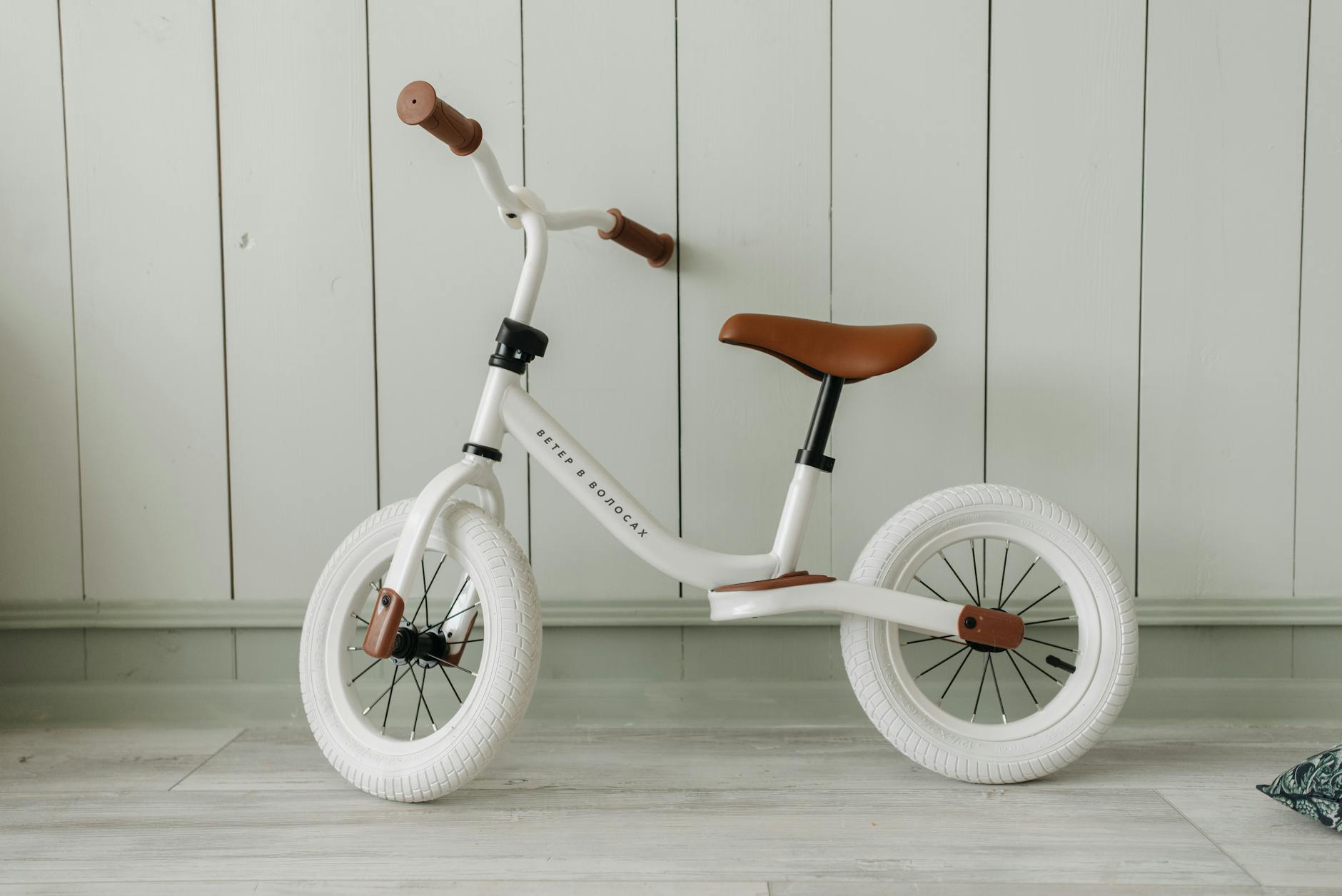
The core distinction between these two methods lies in what skill they prioritize. Balance bikes-for-learning-to-ride-without-training-wheels/” title=”Best Kids Bikes for Learning to Ride Without Training Wheels”>bikes teach equilibrium first. A child on a balance bike must learn to stay upright by shifting their weight and steering into leans, the same counter-steering instinct required on a regular bicycle. Training wheels, by design, prevent this learning from happening. Research from the PMC study notes that training wheels allow children to lean strongly to one side without consequences, meaning they never develop the reflex to steer in the direction of a lean as required on standard two-wheelers. Pedaling, by comparison, is a relatively simple motor skill.
Most children master the circular motion within minutes once they are on a stable platform. The challenge has always been combining pedaling with balance, and this is where the sequencing matters. Balance bikes let children isolate and master equilibrium before adding the complexity of pedals. Training wheels do the opposite, letting children pedal fluently while the balancing lesson waits indefinitely in the background. This difference produces measurable outcomes. Studies compiled by Two Wheeling Tots found that children who learned on balance bikes typically ride traditional bicycles around age four, while training wheel users average closer to age six. That two-year gap represents not just time but also the frustration and relearning that comes when training wheels are finally removed.
Why Research Favors Balance Bikes for Early Learners
The scientific literature increasingly supports balance bikes, though researchers are careful to note that both methods can ultimately work. A 2025 study published in the Journal of Functional Morphology and Kinesiology by Merc and colleagues implemented a structured “Learning to Cycle” program comparing the two approaches while also examining how body composition influences learning outcomes. This type of controlled research helps isolate variables that anecdotal comparisons cannot. USA Cycling states that both methods are effective and safe, but emphasizes there is no perfect age for learning because children develop on their own timeline. This nuance matters.
A physically cautious two-year-old might struggle with the independence a balance bike demands, while an adventurous 18-month-old might take to it immediately. The research averages are useful for planning, but individual variation is significant. However, if your child is already four or five and has never used either method, the calculus changes. At that age, some children have the coordination to skip directly to a pedal bike with brief parental assistance, making the balance bike an unnecessary intermediate step. The balance bike advantage is strongest when introduced early, ideally between 18 months and three years, when the weight and simplicity of these bikes match a toddler’s physical capabilities.
The Weight Factor: Why Lighter Bikes Matter for Small Children
One overlooked advantage of balance bikes is their weight. According to USA Cycling, balance bikes typically weigh between six and nine pounds, while pedal bikes with the same 12-inch wheel size weigh 12 to 15 pounds. For a 25-pound toddler, a balance bike represents 24 to 36 percent of their body weight. A pedal bike with training wheels pushes that ratio to 48 to 60 percent. This difference affects more than just how easily a child can maneuver.
A heavier bike is harder to control when it starts to tip, more exhausting to push back up a driveway, and more intimidating when it falls on a small body. Parents often underestimate how discouraging a heavy bike can be for a toddler who lacks the strength to right it after a tumble. Consider the Strider 12 Sport, one of the most popular balance bikes on the market, which retails for approximately $110 to $130 and weighs under seven pounds. Compare that to an entry-level 12-inch pedal bike with steel training wheels, which can easily exceed 14 pounds. The price points are similar, but the riding experience differs substantially. For the youngest learners, starting with a bike they can physically manage builds confidence that carries through to later stages.

What Balance Bikes and Training Wheels Actually Cost
The balance bike market has matured considerably, offering options across a wide price spectrum. Budget models like the Banana LT start around $50 to $70, providing a functional entry point for families testing the waters. Mid-range options like the Strider 12 Sport sit at $110 to $130, offering better components and durability. Premium models like the Woom 1 at $249 or the Woom 1 Plus at $299 feature lighter frames, better geometry, and components designed for small hands. Training wheels themselves are inexpensive, typically $15 to $30 for a basic set.
However, they require a pedal bike to attach to, and quality lightweight pedal bikes for young children are not cheap. The total cost of a decent 12-inch pedal bike plus training wheels often matches or exceeds a mid-range balance bike, while delivering a heavier, less developmentally appropriate package for toddlers under four. The Strider 14x Sport presents an interesting hybrid approach at $220, with an optional $70 pedal conversion kit that transforms it from balance bike to pedal bike. This addresses the common parent concern about buying a bike that will be outgrown quickly. However, this approach only makes sense if your child is large enough for the 14-inch wheels from the start, which typically means age three or older.
Common Mistakes Parents Make with Both Methods
The most frequent error with training wheels is leaving them on too long. Parents see their child riding confidently and assume the job is done, not realizing that the child has learned to pedal while leaning on a crutch. When the wheels finally come off, often at age five or six, the child may be more fearful and resistant than they would have been at three, having now developed expectations about what riding feels like. With balance bikes, the common mistake is pushing progression too quickly. Some parents grow impatient when their toddler spends months simply walking while straddling the bike, never lifting their feet for a true glide. This walking phase is normal and productive.
The child is learning to steer, building leg strength, and gaining familiarity with the bike as an extension of their body. Rushing to the gliding stage or worse, skipping straight to a pedal bike before the child is ready can undermine the confidence that makes balance bikes effective. Another limitation worth acknowledging: some children simply prefer having pedals from the start. They find the scooting motion of a balance bike unsatisfying or confusing. For these kids, training wheels may actually be the path of least resistance, even if it means a longer overall learning curve. Forcing a method that frustrates your child is counterproductive regardless of what the research averages suggest.
The Growing Balance Bike Market
The balance bike industry has expanded rapidly, with the global market estimated between $855 million and $1.49 billion in 2024, depending on the research source. Projections suggest the market will reach $1.7 billion by 2025, growing at seven to eight percent annually through the early 2030s. Over 30 million units now sell annually across developed and emerging markets combined.
This growth reflects both increased awareness of the developmental benefits and the expanding demographic of potential users. Children aged two to four and four to six account for approximately 55 percent of unit demand, indicating that balance bikes are finding audiences beyond the traditional toddler years. As more parents share their experiences and pediatric recommendations spread, the market shows no signs of slowing.
When to Transition and What to Expect
Most children transition from balance bikes to pedal bikes between ages three and five, with some early adopters making the switch as young as three. The transition itself is often anticlimactic. A child who has mastered gliding on a balance bike typically needs only a few attempts to coordinate pedaling with their existing balance skills. Compare this to the training wheel removal process, which often involves tears, skinned knees, and a parent jogging alongside holding the seat.
The Polygon Bikes recommendation that most children transition between ages three and eight acknowledges the wide range of normal development. USA Cycling’s reminder that there is no perfect age applies equally to this transition. Watch for signs of readiness: sustained glides with feet up, confident steering around obstacles, and expressed interest in pedal bikes. Rushing the transition benefits no one.
Conclusion
The evidence favors balance bikes for most toddlers, particularly those starting between 18 months and three years old. The research showing earlier independent cycling, shorter learning periods, and more effective skill transfer makes a compelling case. Balance bikes teach the hard part first, balance, while leaving the easy part, pedaling, for later.
That said, training wheels remain a viable option for older beginners, children who resist the balance bike concept, or families working with tight budgets and hand-me-down pedal bikes. The best method is ultimately the one your child will actually use consistently. Observe your child’s temperament, consider their age and physical development, and choose the approach most likely to build genuine confidence on two wheels.