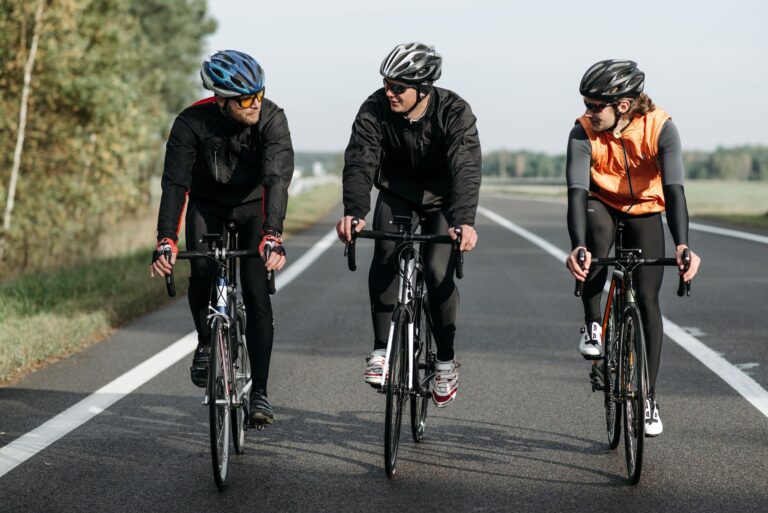
The best-rated cycling jerseys for layering this winter are mid-weight thermal long-sleeves worn over a base layer rather than thick standalone tops. Cycling Weekly's long-sleeve group test, updated for 2026, rates layerable mid-weight jerseys above single heavy ones, because a jersey's useful temperature range extends downward once a thermal base layer sits underneath it.
In practice that points at two kinds of purchase. A true mid-layer jersey like the Castelli Espresso Thermal, which Sigma Sports names its top winter jersey pick at a vendor-stated 6–15°C (43–59°F), and a jacket-replacing jersey like the Le Col Pro Aqua Zero, which Cycling Weekly rates warm from about 6 to 12°C. The first needs layers over and under it; the second is close to the outer shell itself.
Table of Contents
- What "layerable" actually means on a spec sheet
- Which jerseys the 2026 tests rated highest
- Why a tight jersey is a cold jersey
- How to build the stack
- One brand to buy differently now
- Frequently Asked Questions
What "layerable" actually means on a spec sheet
A mid-weight jersey is one whose fabric carries some brushed or fleece backing but no wind membrane across the whole front. That leaves room for a base layer underneath and a gilet or shell over the top without the bulk fighting itself. The Espresso Thermal is the clearest example. Its quoted 6–15°C window is a manufacturer figure rather than a lab measurement, and it describes the jersey worn as intended — over a thermal base, not over bare skin.
Castelli lists it as a current long-sleeve in both men's and women's cuts (SKUs 4524508 and 4524540), so fit is not a reason to buy the wrong gender's garment. Compare that with the Pro Aqua Zero. Cycling Weekly describes it as fleece-lined with windproof, water-resistant front panels, and rates it from roughly 6 to 12°C. That construction means it replaces a jacket rather than sitting under one — stack a shell over it and you are carrying insulation you cannot vent.
Which jerseys the 2026 tests rated highest
Cyclist's 2026 long-sleeve test found the Assos Mille GT, Le Col Hors Categorie and Rapha Classic comfortable from roughly 15°C down to below 10°C. That is the band most riders actually ride in through a temperate winter, and all three are built to take a base layer. The same test flagged a limitation worth more than its word count: the Rapha Classic's cuffs let cold air in.
No amount of layering fixes an opening at the wrist, because the cold air arrives below the insulation rather than through it. Cuff and collar fit is the one spec a warmer base layer cannot compensate for. At the budget end, Gravel Pursuit rates the fleece-lined Przewalski Thermal LS to roughly 40°F (4°C), but notes reviewers find it runs small. That matters for a specific mechanical reason rather than comfort alone — see the next section.
Why a tight jersey is a cold jersey
Insulation works by trapping still air. A jersey sized down crushes the air gap the base layer is there to create, so the warmest garment on paper becomes a cold one on the road. This is why a size-small-running budget jersey is a worse layering buy than its temperature rating suggests.
If you intend to wear a base layer plus a long-sleeve base on the coldest days, you need the jersey to accommodate that volume without compression. The practical test is simple: put the full stack on indoors and reach forward into the drops. If the sleeves bind at the elbow or the base layer feels pressed flat against your chest, the jersey is a size too small for how you plan to use it.
How to build the stack
BikeRadar's winter layering guidance is to use several thin layers rather than one thick one — base layer, long-sleeve jersey, then jacket or gilet. Its reasoning is that cold extremities usually trace back to a soggy base layer, not to a shortfall in insulation.
For the coldest rides, BikeRadar's base-layer advice is to double up synthetics: a sleeveless base beneath a long-sleeve base, both under the jersey. It notes merino is warmer per gram but dries more slowly, and can itch in cheaper weaves. A workable decision order:.
- Pick the jersey for the temperature band you ride most, not the coldest day of the year.
- Choose a mid-weight jersey (Espresso Thermal, Mille GT, Hors Categorie) if you own a gilet or shell; choose a windproof-fronted one (Pro Aqua Zero) if you do not.
- Check cuffs and collar before anything else on the spec sheet.
- Size for the full stack, including a doubled base layer if you ride below freezing.
- Add the outer layer last, and only when the jersey alone is not enough.
One brand to buy differently now
Gorewear still appears in winter jersey round-ups, but the buying situation behind those listings has changed. W. L.
Gore has confirmed it is closing the Gorewear apparel brand after 40 years, with Spring/Summer 2026 the final season and retail orders ending 31 March 2026. Warranties will still be honoured, so a Gorewear thermal jersey is not a bad garment — it is a clearance buy. If you want one, treat the size you need as the only size you will get, because there is no restock and no next season's version.
Frequently Asked Questions
Can I just buy one very warm jersey instead of layering?
You can, but you lose range. A fleece-lined windproof jersey like the Pro Aqua Zero covers about 6–12°C and cannot be vented upward, while a mid-weight jersey plus a base layer adjusts across a wider band.
Merino or synthetic for the base layer under a thermal jersey?
BikeRadar notes merino is warmer per gram, but synthetics dry faster, and a wet base layer is the usual cause of cold hands and feet. Cheaper merino weaves can also itch.
Do the quoted temperature ranges mean the same thing across brands?
No. The Espresso Thermal's 6–15°C figure is vendor-stated rather than lab-tested, while Cycling Weekly's and Cyclist's ranges come from their own riding. Treat them as comparable only within one source.