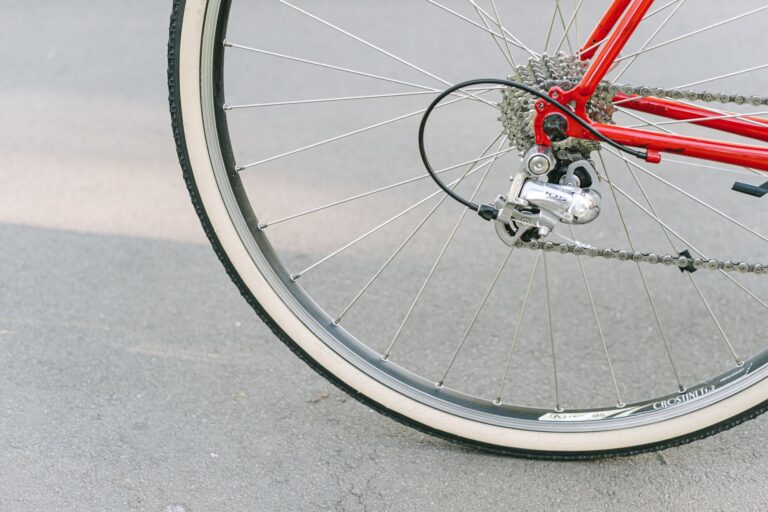
The best home maintenance kit for winter is a cased starter set built around a chain-wear gauge, a chain scrubber and hex wrenches — Park Tool's AK-5 Advanced Mechanic Tool Kit is the clearest off-the-shelf example, at roughly $380–$429 in US listings. If that is more than you want to spend, buy the three things that actually decide whether your bike survives the salt: a $12–$20 chain checker, a wet lube, and a tub of waterproof grease. Winter failures are not wrench failures. Road salt, slush and grit wear drivetrains and brakes far faster than summer riding, so the kit that matters in December is weighted toward cleaning, measuring and lubricating rather than toward more tools.
Table of Contents
- What a winter kit must do that a summer kit does not
- The chain checker is the highest-value tool in the box
- Cleaning and lubrication: the two-solvent wash and wet lube
- Brakes and rotors: the measurements a kit should include
- Torque: why no kit comes with one universal number
- Buying the cased kit, or building your own
- Frequently Asked Questions
What a winter kit must do that a summer kit does not
Park Tool puts it bluntly: winter slush, ice, mud and the road salt they carry "can grind a bike to death". That is the whole case for a seasonal rethink. Your 5 mm hex wrench works the same in January as in July; your chain does not. So the winter additions are consumables and gauges.
A degreaser, a dish-soap bucket, a chain scrubber, a wet lube, a grease tube, and a tool that tells you when the chain is finished. Everything else in a general kit stays as it was. The practical consequence is budgetary. You can spend $400 on a cased kit and still ruin a cassette if you never measured the chain, or spend $60 on consumables and a gauge and get through the season with the drivetrain you started with.
The chain checker is the highest-value tool in the box
A chain stretches as it wears, and past a threshold it starts chewing the cassette and chainrings instead of meshing with them. Park Tool sets that threshold by drivetrain: 11–12-speed chains should be replaced at or just before 0.5% elongation, while 5–10-speed chains run to 0.75%. A $12–$20 gauge is therefore the item that decides whether winter costs you a $30 chain or a $250 drivetrain. Buy the right gauge for your drivetrain.
The CC-4.2 Chain Checker reads 0.5%, 0.75% and 1.0%, covers any 5- to 13-speed derailleur chain, and is the gauge Park specifies for SRAM Flattop and SRAM T-Type 12-speed chains — which the older CC-3.2 cannot measure correctly. If you run modern SRAM, the cheaper gauge gives you a reading you cannot trust. Check weekly in winter, not monthly. Wear accelerates when grit is in the rollers, and a chain that read clean in November can be past 0.5% by the new year.
Cleaning and lubrication: the two-solvent wash and wet lube
Park Tool's wash procedure is deliberately two-stage — degreaser on the chain first, then soapy water — because combining a degreaser and a soap removes grit that the degreaser alone leaves behind. Two warnings travel with it: let the bike dry after rinsing, and never blast compressed air directly at bearings. For lube, winter picks itself. Park Tool's guide describes wet lubes as high-viscosity formulas that perform well in humid or rainy climates, while dry lubes are for dusty conditions because they attract less dirt.
The same guide notes that lube washes out in heavy rain, with no remedy except re-applying — so buy a larger bottle than you think you need. Chain lube is not the right product for bearings and threads. For headset, hub and seatpost interfaces facing a season of salt spray, Park specifies grease: PolyLube 1000 repels moisture and has extremely high shear strength, which is what those interfaces need over months of wet. A workable winter consumables list:.
- Degreaser, plus a chain scrubber to hold it against the chain
- Dish soap and a bucket of warm water for the second pass
- Wet lube, in quantity
- Waterproof grease for bearing and seatpost interfaces
- Clean rags and somewhere warm for the bike to dry
Brakes and rotors: the measurements a kit should include
Winter grit is abrasive, and disc brake pads disappear quickly in it. Shimano's user manuals set hard limits: brake pads must not be used at 0.5 mm or less of friction material, and rotors must not be used at 1.5 mm or less — or once the aluminium layer becomes visible on sandwich-style rotors. Those numbers are why a small ruler or caliper belongs in a winter kit.
Pads at 0.6 mm look much like pads at 0.4 mm by torchlight in a garage, and the difference is whether you are braking on backing plate. Rotor thickness is the one people forget. Pads are consumable by expectation; rotors wear silently across two or three pad changes and then fall below spec.
Torque: why no kit comes with one universal number
A torque wrench is worth owning, but only alongside the right figure. Park Tool's reference publishes manufacturer figures rather than a single universal number — 19.6–29.4 Nm (174–260 in-lb) for a Shimano quill-type stem binder bolt, for example — and notes that many drivetrain manufacturers have unique recommendations for their own components.
The operating rule is simple: the value stamped on the part overrides any chart. Carbon seatposts, stem faceplates and disc rotor bolts are usually marked, and the marking wins.
Buying the cased kit, or building your own
The AK-5 Advanced Mechanic Tool Kit ships cased with the AWS-1 3-way hex wrench (4/5/6 mm), a CC-4 chain checker, a CM-5.3 Cyclone chain scrubber and the 4th-edition Big Blue Book of Bicycle Repair. US retail listings cluster at roughly $380–$429, and Park notes kit contents are subject to change — so check the current listing rather than an old review.
That bundle suits someone who wants one purchase and a reference manual. It is less suited to a rider who already owns hex keys, in which case the useful spend is the chain checker, the scrubber, the consumables and a torque wrench, bought separately. Either way, check the included chain checker against your drivetrain before you rely on it: a kit shipping a CC-4 variant covers 5- to 13-speed, and a SRAM Flattop or T-Type chain needs the CC-4.2 specifically.
Frequently Asked Questions
How often should I check chain wear in winter?
Weekly, rather than monthly. Grit in the rollers accelerates wear, so a chain reading under 0.5% in November can pass the limit within weeks of salted riding.
Can I use the same lube year-round?
Not sensibly. Park Tool's guide treats wet lubes as the humid- and rainy-climate choice and dry lubes as the dusty-climate choice, so winter means switching to wet and re-applying after heavy rain.
Do I need a torque wrench for basic winter maintenance?
Only for fasteners with a published figure — stem bolts, seatpost clamps, rotor bolts. Use the value stamped on the component rather than a general chart.