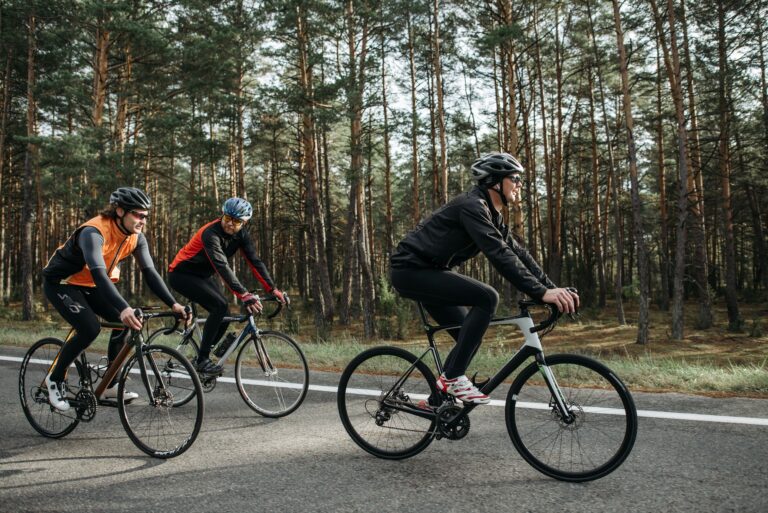
Most riders get results from easy to moderate cadence drills, short intervals, one or two sessions per week, and simple ride comparisons. Cadence means pedal revolutions per minute, and training it helps you apply power smoothly at low and high pedal speeds. Low-cadence work builds force for climbs, while high-cadence work builds control for fast flats. Pick one goal, such as steadier climbing or smoother fast pedaling, then match the drill to that goal.
Table of Contents
- What effort should you use?
- How long should intervals last?
- How often should you practice?
- How do you track results?
What effort should you use?
Use easy aerobic effort for low-cadence drills. Choose a harder gear that slows your pedaling while you can still breathe steadily. Your legs should feel loaded, not strained, and your chest should stay relaxed. Use moderate effort for high-cadence drills.
Choose an easier gear that lets your feet move quickly without bouncing in the saddle. Focus on quiet hips, light hands, and even pressure through the whole pedal circle. Stop or adjust if form breaks down. Bouncing, rocking hips, knee ache, or gasping mean the gear or effort is wrong for that day. Shift easier, slow the drill, and rebuild smooth motion first.
How long should intervals last?
Keep single efforts short so form stays clean. A workable starting point is 30 seconds to three minutes for low-cadence work and 30 seconds to two minutes for high-cadence work. End the interval when power drops or pedaling turns choppy.
A simple starting session looks like this: Keep total drill time small at first, around 10 to 20 minutes plus warm-up. Add one repeat per session when all repeats stay smooth. Cut the session short on tired legs.
- warm up with 10 minutes of easy pedaling
- ride 4 short low-cadence pushes with equal easy spinning between
- ride 4 short high-cadence spins with equal easy spinning between
- cool down with easy pedaling until breathing settles
How often should you practice?
Practice once or twice per week on days when your legs feel fresh. Place cadence work after a rest day or before an easy endurance ride. That spacing gives muscles time to adapt without adding heavy fatigue. Keep at least one easy day between harder low-cadence sessions.
Use high-cadence spins more freely because they stress coordination more than force. Skip drills during illness, sharp pain, or deep lingering soreness. Stay with one pattern for three weeks before changing it. Consistency shows what works better than constant switching. If progress stalls, change only effort, length, or frequency, not all three.
How do you track results?
Set a baseline on a familiar road or climb. Ride the same course, in similar wind and gearing, at a steady effort you can repeat. Note how speed, breathing, and leg feel respond.
Record the same few points after each test ride: Compare matching rides after several weeks of steady practice. Better results look like higher speed for the same effort, smoother fast pedaling, or steadier climbing without extra strain. Save one baseline ride this week, then repeat the same ride after three weeks of steady practice.
- course, distance, gear choice, and wind
- average speed and heart rate if you use them
- pedal feel, bounce, and breathing at the same speed
- knee or back comfort during and after