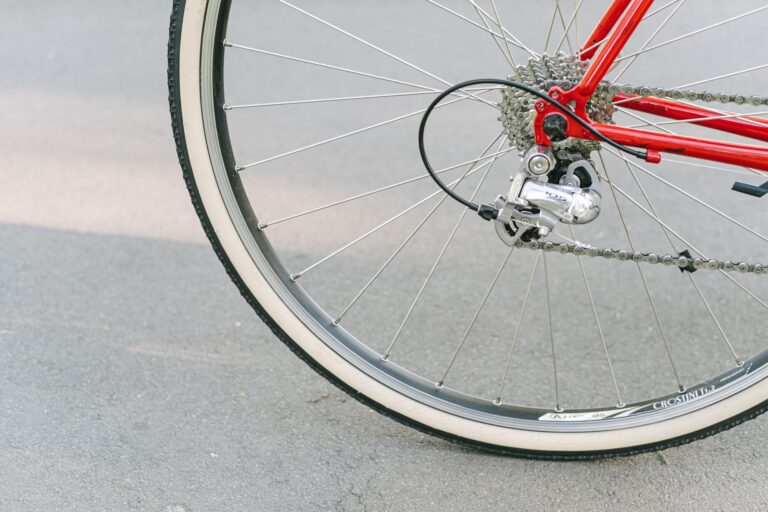
Bicycle tire and inner-tube recycling works in narrow programs, but material-separation limits block true closed-loop recycling for most tires. Tubes can become new tubes in one takeback system, while tires mostly become flooring, paths, or recovered ingredients, so repair and reuse often prevent more waste. Material separation means pulling apart rubber, steel beads, and textile fibers before reuse. That step decides whether old rubber returns to cycling products or falls to lower-value uses.
Table of Contents
- How does tube recycling work?
- Why are tires harder to separate?
- What happens to collected tires?
- Where is the greenwashing risk?
- What cuts waste more reliably?
How does tube recycling work?
Schwalbe collects used inner tubes of any brand through specialist retailers. Its in-house devulcanization process breaks sulfur bonds in butyl rubber and feeds it into new tubes. American Recycler reports every new standard tube contains about 20 percent recycled material after more than 9 million tubes recycled in Europe the American Recycler report.
Devulcanization means selectively breaking sulfur crosslinks that lock vulcanized rubber. That locked network cannot simply melt and remold. University reporting summarized in TechXplore cites that chemical barrier and a 2021 estimate that under 2 percent of rubber products are recycled or reused.
Why are tires harder to separate?
A bicycle tire is a composite of rubber, carbon black, steel wire, and textile fiber. The MDPI Recycling review finds shredding plus magnetic and air separation typically yields roughly 70 percent rubber granules, 5 to 30 percent steel, and up to 15 percent fiber the MDPI Recycling review.
The steel wire bead makes bike tires unusually tough to shred. Conventional cutter teeth chip on the bead. In a BikeBiz interview, UK recycler Velorim said it built a specialized ripping machine to tear the bead apart before two-stage rubber shredding and steel recovery.
What happens to collected tires?
Schwalbe collects used bicycle tires through German dealers and sends them to Pyrum's Dillingen pyrolysis plant. Pyrum converts them to recovered carbon black, which replaces fossil carbon black in tires. Euronext company news reports the Green Marathon used 100 percent recovered carbon black at launch, with use later expanded to 70 percent of tires the Euronext company notice.
The UK National Bicycle Tyre Recycling Scheme takes a different path. With Velorim and NGB Clean, it uses more than 600 collection sites and shreds tires and tubes into non-slip flooring, cycle paths, and construction materials. Tire Technology International describes that route as downcycling, not tire-to-tire recycling. Cement kilns offer little backup because Resource Recycling Magazine reports they reject small bicycle tires as not worthwhile fuel.
Where is the greenwashing risk?
Recyclable can mean technically possible, not actually collected and reprocessed. The U.S. FTC Green Guides warn that recyclable claims should be qualified when recycling is unavailable to most consumers.
Bike-tire schemes remain limited to specific countries and retailer drop-off networks. Watch for vague takeback language without a named recycler, process, or end use. Ask where drop-offs go, what material comes out, and whether it becomes a new tire or tube. A program that only promises diversion from landfill is downcycling or energy recovery, not circularity.
What cuts waste more reliably?
Patching, careful inflation, and keeping good casings in service avoid separation entirely. Thermoplastic polyurethane tubes give another option because they melt and reprocess.
BASF reporting via Rubber News describes Schwalbe Aerothan tubes made with Elastollan as 100 percent recyclable, unlike crosslinked butyl and latex. Patch the tube first, then drop off only what you cannot safely save.
- Patch butyl and latex tubes repeatedly before replacement.
- Reserve sealant and tubeless setups for puncture-prone riding.
- Choose repairable TPU tubes where fit and cost allow.
- Save spent tubes and tires for the named dealer or scheme bin, not mixed curbside recycling.
You Might Also Like
- Carbon bicycle frame recycling through pyrolysis, solvolysis, and reuse: Tradeoffs, Greenwashing Risks, and Better Alternatives
- Bicycle tire and inner-tube recycling programs and material-separation limits: What Manufacturers, Shops, and Cyclists Should Compare
- Bicycle tire and inner-tube recycling programs and material-separation limits: How Claims, Metrics, and Environmental Impacts Can Be Verified