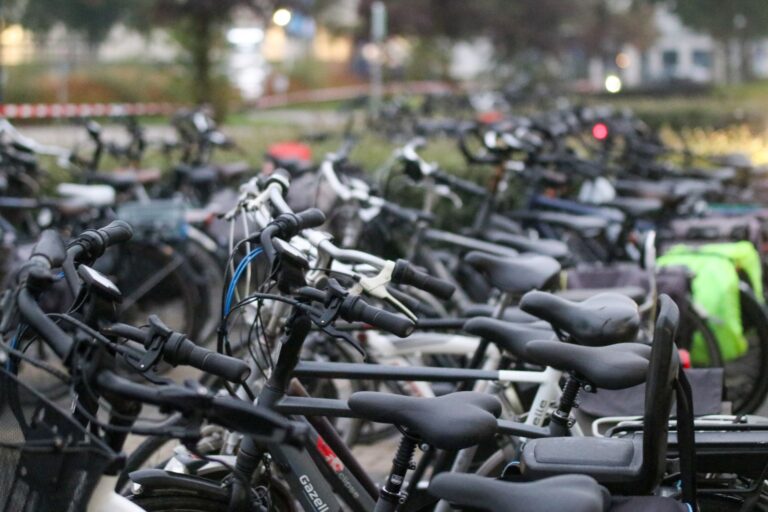
The 10 essentials for storing a bike at work are a strong U-lock, a secondary lock, a fixed anchor, secure access, weather cover, lights, a compact repair kit, a pump, clothing storage, and theft documentation. Most cyclists can skip oversized tool kits, decorative covers, floor stands, and expensive accessories that do not improve security or protect the bike. Match the gear to the storage location. A bike locked outdoors all day needs stronger theft and weather protection than one kept inside a controlled-access room.
Table of Contents
- Start with the three-part security system
- Control access and reduce exposure
- Prepare for the ride home
- Keep work clothes and the bike secure
- What most commuters can skip
Start with the three-part security system
**A hardened U-lock:** Use it to secure the frame to a fixed object. Choose the smallest practical size because less empty space gives thieves less room to position cutting or leverage tools. **A secondary lock:** Add a chain, second U-lock, or sturdy cable for the other wheel. A cable works as a secondary deterrent, but it should not be the only lock in a public area because hand tools can defeat many cables.
**A fixed anchor:** A lock is only as useful as the object holding it. Use a properly installed rack or ground anchor that cannot be lifted, unscrewed, cut easily, or pulled out of the ground. Lock the frame and rear wheel to the anchor when the lock dimensions allow it. Secure the front wheel separately, especially if either wheel uses a quick-release lever.
Control access and reduce exposure
**Secure workplace access:** A locked bike room, cage, individual locker, or monitored indoor area adds a protective layer that street furniture cannot provide. Confirm who can enter, whether the door closes automatically, and whether guests can follow employees inside. **A weather-resistant cover:** Use a fitted cover if the bike sits outdoors or under a partly open shelter.
It protects the saddle, drivetrain, controls, and electrical contacts from rain, dirt, and prolonged sun exposure. A cover does not replace a lock, and it can catch strong wind if fitted loosely. Avoid leaving a wet bike sealed under a cover for long periods; trapped moisture can encourage corrosion.
Prepare for the ride home
**Removable lights:** Carry dependable front and rear lights if the return trip could happen after dark or in poor visibility. Remove clip-on lights during storage because they are easy to steal and batteries may discharge unnoticed. **A compact repair kit:** Pack tire levers, a tube or patch kit, and the small tool needed to remove the wheels. A multitool should match the fasteners on the bike rather than include dozens of unused attachments.
**A compact pump or inflator:** A frame pump is reliable for repeated use, while a small inflator saves space. If using compressed-gas cartridges, carry enough capacity for the tire size and understand that each cartridge provides only a limited supply. Check that the spare tube has the correct diameter, width range, and valve type. A perfectly packed repair kit is useless when its tube does not fit the wheel.
Keep work clothes and the bike secure
**A ventilated clothing bag or locker setup:** Separate damp cycling clothes from clean workwear. A breathable bag, hanger, and small towel manage moisture better than sealing wet garments in an airtight backpack. **Theft-identification records:** Save the frame serial number, clear photographs, distinguishing features, and proof of purchase in a place accessible away from the bike.
If theft occurs, these records help identify the bicycle and support reports or insurance claims. Remove easy-to-take items such as a computer, pannier, helmet, and battery when the storage area is shared. For an electric bike, follow the battery maker's storage and charging instructions and use only an approved charging location at work.
What most commuters can skip
A freestanding floor rack keeps a bike upright but does not provide theft protection unless it is fixed securely to the building. A full workshop tool kit is also unnecessary when the goal is storing the bike and handling common roadside problems.
Consider skipping these items unless the workplace or route creates a specific need: Before buying more gear, inspect the workplace storage area during normal commuting hours. Check anchor spacing, lighting, camera coverage, weather exposure, access rules, and whether the chosen lock can pass through both the bike and rack.
- A thin cable lock as the primary lock
- A heavy repair stand for routine commuting
- A decorative cover without secure fasteners
- Duplicate tools that do not fit the bike
- An alarm used without a strong physical lock