When your pedals turn but the rear wheel does not move, the drivetrain has lost its connection between the crank and the hub. The most common cause is a failed freehub or freewheel ratchet — the spring-loaded pawls inside the rear hub that grip when you pedal — though a dropped chain, a broken chain, or stripped hub splines produce the same symptom. You can narrow it down in under a minute without tools. Look at the chain first, then spin the cranks slowly by hand while watching the rear cassette: what the cassette does while the pedals turn tells you which part has failed.
Table of Contents
- The 60-second diagnosis
- Why the freehub is the usual suspect
- Loose lockring or stripped splines
- Failures at the crank end
- What you can ride, and what you cannot
- Frequently Asked Questions
The 60-second diagnosis
Start with the obvious: look down at the chain. If it has derailed off the chainring or the cassette, or snapped entirely, the pedals will spin freely with little resistance and the fix is simple.
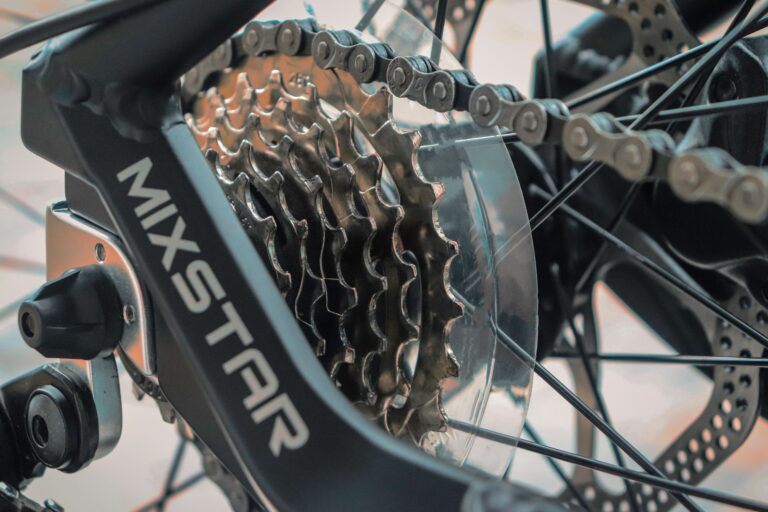
A dropped chain often wedges between the cassette and the spokes or between the chainring and the frame, so check both spots. If the chain is intact and seated, lift the rear wheel (or flip the bike) and turn the cranks by hand. Watch the cassette — the stack of sprockets on the rear hub — and note which of these you see: Each of these points to a different repair, covered below.
- Chain moves, cassette spins, but the wheel stays still: the freehub or freewheel ratchet is slipping. This is the classic cause.
- Chain moves but the cassette does not turn at all: the cassette lockring is loose or the splines connecting cassette to hub body are stripped.
- Cranks turn but the chain does not move: the chainring bolts have failed or, on some cranks, the spider or lockring interface has let go.
- Cranks turn but the chainring does not: a crank-to-spindle or chainring-mount failure, common after a crank has worked loose and rounded off.
Why the freehub is the usual suspect
The freehub is the ratcheting mechanism on the rear hub that the cassette slides onto. Inside it, small spring-loaded teeth called pawls engage a toothed ring when you pedal forward and click freely when you coast — that click is the familiar coasting sound. On older or cheaper bikes the equivalent part is a freewheel, where the ratchet is built into the sprocket cluster itself, but the failure behaves identically. Pawls fail in two main ways. Old, thickened grease or water contamination can gum them up so they no longer spring out to engage; this is especially common after winter riding, storage in a damp shed, or a bike that has sat unused for years.
Alternatively, the pawl springs or the pawls themselves break from wear. A gummed-up freehub often gives warning signs before failing completely: pedaling that occasionally slips forward with a clunk, a quieter-than-usual coasting click, or slipping that appears in cold weather and disappears once the hub warms up. Cold thickens contaminated grease, which is why this failure frequently shows up on the first frosty morning of the season. If the freehub is only gummed, a shop can sometimes revive it by flushing and re-lubricating. If pawls or springs are broken, the freehub body is replaced as a unit on most hubs, or the whole freewheel is replaced on freewheel-equipped bikes. A freehub body is a modest part, but it must match your hub brand and model, so identify the hub before ordering.
Loose lockring or stripped splines
If the cassette itself sits motionless while the chain tries to drag it around, the cassette is no longer locked to the freehub body. The lockring — the threaded ring that clamps the cassette down — can loosen over time, letting the sprockets float and spin without driving the hub. Tightening it requires a cassette lockring tool and a chain whip, both standard shop items. The worse version of this is stripped splines.
Cassettes mount on ridges (splines) on the freehub body, and aluminum freehub bodies in particular can have those ridges gouged or sheared by the sprockets under load, especially if the lockring ran loose for a while. Once the splines are rounded off, the cassette spins on the body no matter how tight the lockring is, and the freehub body needs replacing. You can distinguish the two by removing the wheel and wiggling the cassette by hand. A loose lockring gives rattle and play but the cassette still catches when turned; stripped splines let the cassette rotate on the body with a gritty, grinding feel.
Failures at the crank end
Less often, the break in the chain of drive is at the front. Chainring bolts can shear or fall out one by one until the ring separates from the crank spider, at which point the cranks turn but the chainring — and therefore the chain — does not. This usually announces itself earlier with creaking under hard pedaling, so a sudden failure here often follows weeks of ignored noise.
On modern cranks with direct-mount or lockring-mounted chainrings, the mounting interface itself can strip or unthread. And a crank arm that has worked loose on its spindle can round out its square-taper or splined interface, letting the arm rotate on the axle. A rounded crank interface is not repairable; the crank arm, and sometimes the spindle, must be replaced. The front-end failures are easy to confirm visually: turn the cranks and watch whether the chainring turns with them, then grab the chainring and check for play against the crank.
What you can ride, and what you cannot
A dropped chain you can fix at the roadside in a minute: shift the rear derailleur to relieve tension, lift the chain back onto the chainring, and rotate the cranks. Pedal gently for the first few strokes and check that nothing is bent — a chain jammed behind the cassette can bend the derailleur hanger on the way in or out. A slipping freehub is not safe to ride, even if it intermittently catches.
When pawls engage suddenly after a slip, your full weight drops onto the pedal with no resistance and then a violent catch, which is how riders go over the bars or hit a knee on the stem. Walk the bike or arrange a lift. A note for internally geared hubs and coaster-brake bikes: the same symptom on these usually means an internal clutch or driver failure, and on a coaster-brake bike it can also mean the brake no longer works, since braking runs through the same hub. Stop riding immediately in that case — you may have lost the rear brake along with the drive.
Frequently Asked Questions
Can I fix a slipping freehub myself?
Sometimes. If it is gummed grease, flushing the freehub with a light lubricant can restore the pawls, and some freehub bodies open for service with basic tools. Broken pawls or springs mean replacing the freehub body, which requires a cassette tool, chain whip, and often a specific axle wrench — a straightforward shop job if you lack them.
How do I know if my bike has a freehub or a freewheel?
Freehubs are standard on most bikes from roughly the last three decades; the ratchet stays on the hub when the sprockets come off. Freewheels, common on older and entry-level bikes, thread the ratchet and sprockets on as one unit. If the sprockets keep clicking as a unit when spun backward off the bike, it is a freewheel.
Why did this happen suddenly in cold weather?
Contaminated or aged grease inside the ratchet thickens in the cold and holds the pawls retracted so they cannot engage. The same hub often works again indoors once it warms, which confirms the diagnosis — but it will keep failing until the hub is cleaned and re-greased.