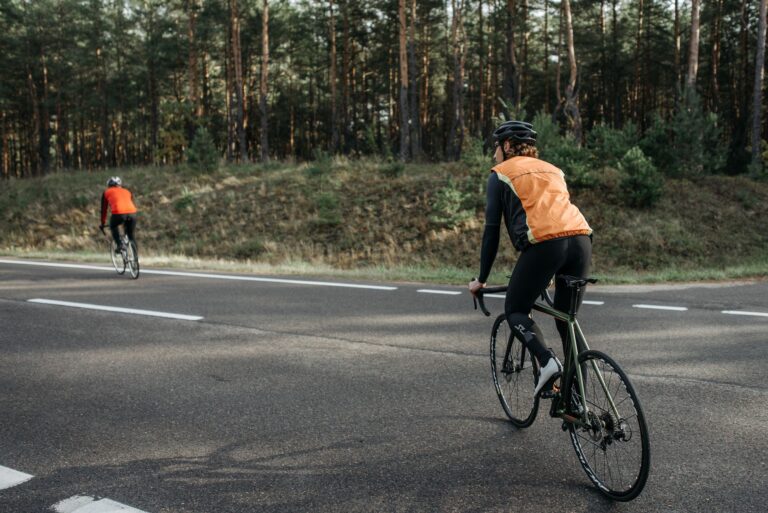
Start Zone 2 cycling with an easy, controlled ride, then increase the duration in small steps while keeping the effort steady. Zone 2 means riding immediately below your first lactate or ventilatory threshold—the point where breathing and metabolic strain begin rising more sharply. You do not need laboratory testing to begin, but no watch or app can identify this intensity perfectly. Zone 2 is useful for organizing endurance rides, yet current evidence does not show that it is uniquely superior to every other exercise intensity.
Table of Contents
- What does Zone 2 mean for cyclists?
- How can you judge the intensity?
- A manageable first-ride plan
- How should Zone 2 progress?
- When safety should override the plan
What does Zone 2 mean for cyclists?
"Zone 2" is not a universal setting. Heart-rate monitors, cycling computers, coaches, and training platforms may divide intensity differently, so one system's Zone 2 may not match another's. A 14-expert commentary in the International Journal of Sports Physiology and Performance recommends defining Zone 2 as work immediately below the first lactate or ventilatory threshold.
Cyclists comparing workouts should therefore identify the test or zone system used. Laboratory testing can locate this threshold more precisely, but precision is not essential for a recreational rider building controlled aerobic exercise. Consistency matters more than forcing your heart rate or power into a borrowed range.
How can you judge the intensity?
Use the talk test as your primary guide. During a moderate ride, you should be able to speak but not sing; if you can manage only a few words, the effort has become vigorous, according to the CDC's physical-activity guidance. On flat ground or an indoor trainer, settle into a pace that allows complete sentences. Ease off when a hill, headwind, or acceleration makes conversation difficult.
The talk test controls effort rather than speed, which naturally changes with terrain and conditions. Heart rate can provide a secondary check. The American Heart Association describes roughly 50–70% of age-predicted maximum heart rate as a general moderate range, but medication and heart conditions can alter the response. Treat the number as supporting information, not a command to ignore breathing or symptoms.
A manageable first-ride plan
Choose a duration you can complete without straining, and keep the opening and closing portions slower. Avoid chasing average speed, other riders, or a device score during the first few sessions.
Use this simple sequence: Repeat a manageable duration before adding more time. The American Heart Association's scientific statement advises new exercisers to build gradually, adding five to ten minutes at a time. For example, a rider comfortable with 20 minutes could try 25 minutes rather than making the next ride dramatically longer.
- Begin with a gradual warm-up.
- Settle into an effort that passes the talk test.
- Shift down or reduce resistance when breathing becomes too hard.
- Finish with a slower cool-down.
- Note the duration and whether the effort stayed controlled.
How should Zone 2 progress?
Increase one demand at a time. Add five to ten minutes while preserving the same conversational effort; if that feels excessive, return to the previous duration and allow more time to adapt. Do not turn every longer ride into a harder ride. More speed, steeper terrain, and more duration can each raise the workload. A route that lets you control effort is more useful for progression than one that repeatedly forces vigorous climbing.
For general health, the World Health Organization recommends accumulating 150–300 minutes of moderate aerobic activity each week, and cycling counts toward that total. People doing little activity should start with small amounts and gradually increase frequency, intensity, and duration. Zone 2 also need not replace harder exercise. A 2025 Sports Medicine review found that claims of unique benefits for mitochondrial capacity or cardiometabolic health remain unestablished in the general population. Much of the enthusiasm has been extrapolated from elite endurance athletes, while higher-intensity exercise also has substantial supporting evidence.
When safety should override the plan
Cyclists with known heart disease should obtain clinician approval before starting an exercise program. Stop riding and seek medical evaluation if chest pain or pressure, severe shortness of breath, or light-headedness develops. Outdoor rides add traffic and crash risks that an intensity target cannot address.
The CDC recommends a properly fitted helmet for every bicyclist on every ride because helmets reduce the risk of head and brain injuries. Older cyclists should be especially deliberate about route choice and fall prevention. Adults aged 55–69 have the highest bicycle death rates in CDC data, while the WHO advises adults 65 and older to add balance, coordination, and muscle-strengthening activities.