The Polar H10 is the best heart rate monitor for most cyclists in 2026, offering 99.6% accuracy via electrical signal measurement, dual ANT+ and Bluetooth connectivity, and HRV tracking for around $90. If you want a chest strap that simply works with every bike computer, training app, and smartwatch on the market, the H10 has earned its reputation as the gold standard through years of head-to-head testing by BikeRadar, CyclingNews, and Cyclist magazine. For riders who hate chest straps, the Coospo HW807 armband delivers comparable accuracy at less than half the price.
But picking the right monitor is only half the equation. A heart rate monitor is only as useful as the training structure behind it, and most cyclists either ignore their heart rate data entirely or spend too much time riding in the wrong zones. This article breaks down the top monitors worth buying right now, explains the real accuracy differences between chest straps, armbands, and wrist sensors, and covers how to actually use heart rate zone training to get faster on the bike rather than just collecting data.
Table of Contents
- Which Heart Rate Monitor Is Best for Cycling in 2026?
- Chest Strap vs. Armband vs. Wrist — What the Accuracy Gap Actually Looks Like
- How Heart Rate Zone Training Makes You a Faster Cyclist
- Polarized Training vs. Sweetspot — Which Approach Works Better Long Term?
- Recovery Rides and Why Your Heart Rate Monitor Matters on Easy Days
- Connectivity and Compatibility — What to Check Before You Buy
- Where Heart Rate Monitoring Is Heading for Cyclists
- Conclusion
- Frequently Asked Questions
Which Heart Rate Monitor Is Best for Cycling in 2026?
The answer depends on your budget and how much you dislike wearing a chest strap. The Polar H10, priced at roughly $90, uses electromyography to detect the electrical signals of each physical heartbeat, which is why it consistently tops accuracy tests. It is water-resistant to 30 meters, supports HRV tracking, and connects over both ANT+ and Bluetooth simultaneously. For the vast majority of cyclists doing structured training, this is the monitor to buy. The Garmin HRM-Pro Plus costs more at around $130 but adds internal data storage, meaning it records your heart rate even when no phone or bike computer is paired, syncing the data later.
Its snap-on pod design also shields the battery contacts from sweat corrosion, a problem that plagues some cheaper chest straps over time. On the budget end, the Wahoo Tickr remains available at roughly $50 and delivers reliable readings with broad app compatibility. Wahoo’s newer TRACKR Heart Rate model, at about $90, replaces disposable coin cell batteries with a built-in rechargeable battery and a redesigned strap that makes it the lightest monitor in most test lineups. One caveat: cycling Weekly’s testing noted a tiny lag on super-fast sprints compared to the Polar H10, so if you are doing track work or very short explosive intervals, the H10 still has the edge. For riders who want a bridge between old ANT+ sensors and modern Bluetooth devices, the 4iiii Viiiiva serves double duty as both a heart rate monitor and a protocol converter.
Chest Strap vs. Armband vs. Wrist — What the Accuracy Gap Actually Looks Like
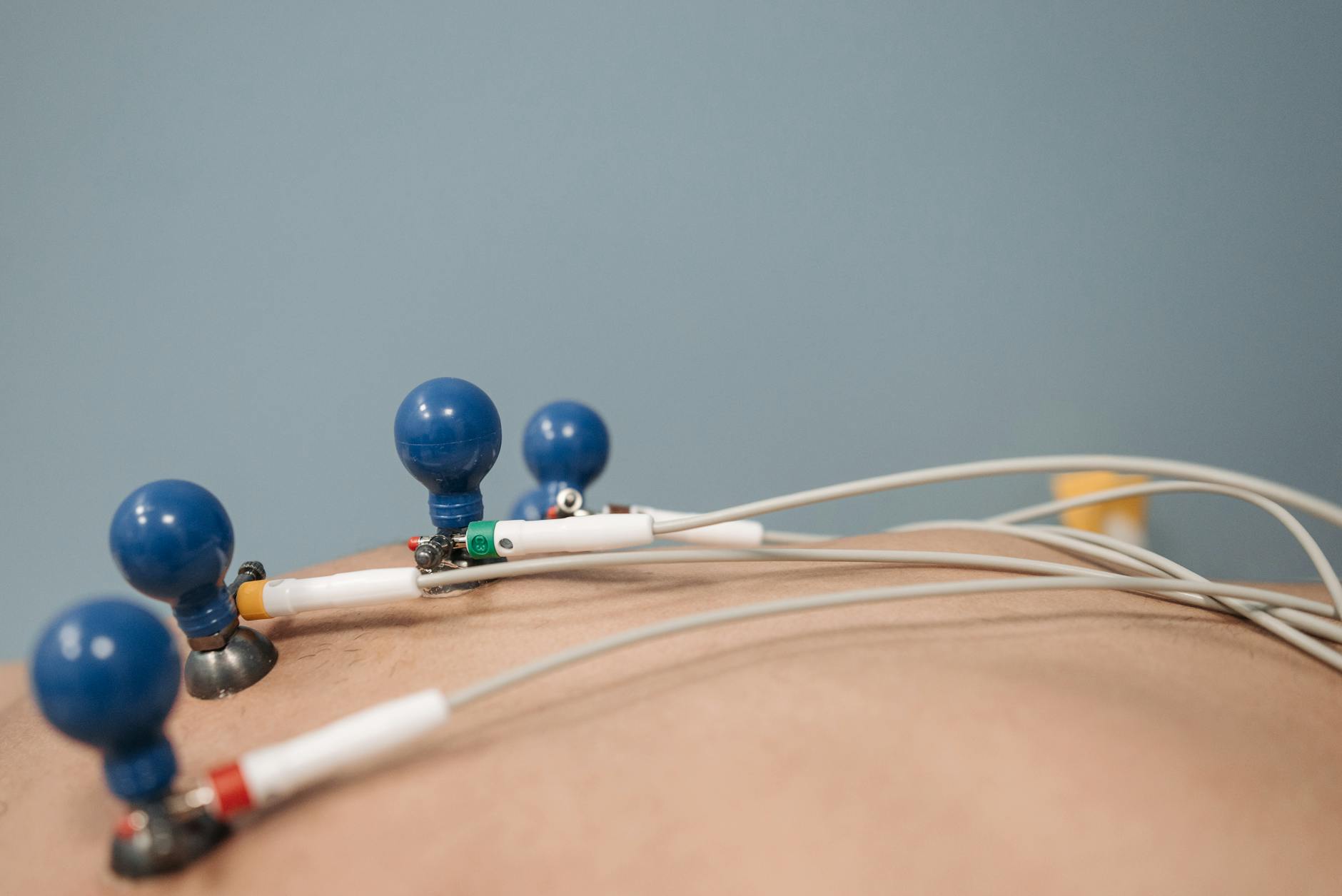
Chest straps achieve roughly 99.6% accuracy when worn correctly because they sit close to the heart and measure electrical signals directly, similar to a medical ECG. This is not marketing fluff. The technology reads the actual depolarization of your cardiac muscle, which is why hospitals use the same principle. For steady-state riding, tempo efforts, and threshold intervals, a properly fitted chest strap is essentially clinical-grade. Arm-based optical monitors have closed the gap significantly.
The Coospo HW807, an armband priced between $36 and $40, was tested by Road.cc and found to produce data “comparable to the numbers you get from a chest-strap sensor.” It achieves a stated accuracy tolerance of plus or minus 1 bpm, connects via Bluetooth 5.0 and ANT+, carries an IP67 waterproof rating, and lasts up to 20 hours on a single charge. It works with over 200 apps including Wahoo Fitness, Strava, and Polar Beat. However, if you ride in hot conditions and sweat heavily, armbands can struggle. The Wahoo Tickr Fit, for instance, was noted to drop heart rate readings or give inaccurate results when arms got sweaty during cycling. The best placement for an armband while cycling is the upper arm on the bicep, which provides good capillary coverage with limited bone interference. Wrist-based sensors on smartwatches remain the least accurate option for cycling specifically, because gripping handlebars restricts blood flow and introduces motion artifact that confuses optical sensors.
How Heart Rate Zone Training Makes You a Faster Cyclist
Zone 2 training, the conversational aerobic pace that feels almost too easy, is the foundation of endurance performance. Research shows that sustained Zone 2 riding increases mitochondrial density, capillarization, and aerobic enzyme content in muscles. In practical terms, this means your muscles become better at producing energy from fat and oxygen, which directly improves your ability to ride longer and harder before fatigue sets in. A cyclist who spends 80% of their weekly volume in Zone 2 builds a bigger aerobic engine than one who hammers every ride at moderate intensity. Zone 3 and Zone 4 work, often called threshold training, improves your lactate threshold — the intensity at which lactic acid accumulates faster than your body can clear it.
Pushing this ceiling higher lets you sustain faster speeds on climbs, in time trials, and during breakaway efforts. At the opposite extreme, Zone 6 sprint work produces surprising aerobic gains. Studies have shown that a few minutes of maximal sprint training can be more effective at increasing a muscle’s aerobic capabilities than many hours of endurance riding. This does not mean you should only sprint. It means brief, all-out efforts provide a training stimulus that long slow rides cannot replicate, and a heart rate monitor helps you confirm you are actually reaching those peak intensities rather than just feeling like you are going hard.

Polarized Training vs. Sweetspot — Which Approach Works Better Long Term?
Polarized training, where you spend the majority of your time in Zones 1 and 2 with hard sessions in Zones 5 and 6 and minimal time in the moderate Zone 3 and 4 range, is supported by scientific studies of both professional and amateur cyclists. The logic is straightforward. Easy rides build your aerobic base without accumulating excessive fatigue, and hard sessions provide the high-intensity stimulus needed for adaptation. The middle zone, sometimes marketed as “sweetspot” training, produces quick initial fitness gains but leads to stagnation and burnout when overused because it is too hard to recover from easily yet not hard enough to trigger the deepest adaptations. This does not mean sweetspot work is useless.
For time-crunched cyclists who can only ride four or five hours per week, some moderate-intensity work fills a practical gap. But if you have been riding sweetspot intervals three times a week for months and your FTP has flatlined, the research suggests dialing those sessions back in favor of genuinely easy volume and genuinely hard intervals. A heart rate monitor is essential for this approach because perceived effort is unreliable. What feels like an easy Zone 2 ride often drifts into Zone 3 without objective data to keep you honest. The Polar H10 and Garmin HRM-Pro Plus both support HRV tracking, which adds another layer by helping you monitor fatigue and recovery status day to day so you can decide whether today’s plan should be a hard session or an easy spin.
Recovery Rides and Why Your Heart Rate Monitor Matters on Easy Days
Active recovery rides after hard sessions are shown to be more beneficial than complete rest, promoting movement, tendon flexibility, and toxin flushing from muscles. But the most common mistake cyclists make on recovery days is riding too hard. Without a heart rate monitor, a “recovery ride” easily becomes a moderate effort that adds training stress instead of reducing it. Keeping your heart rate firmly in Zone 1 during recovery spins requires discipline, and a monitor with audible or visual alerts makes that discipline much easier.
This is where cheaper monitors like the Wahoo Tickr or the Coospo HW807 armband earn their value. You do not need clinical-grade precision on a recovery ride. You need a reliable signal telling you whether you are staying easy enough. The HW807’s 20-hour battery life means you can wear it on multiple rides between charges without thinking about it, and at under $40, it is an easy second monitor to keep in your jersey pocket if your primary chest strap is drying out from yesterday’s intervals.

Connectivity and Compatibility — What to Check Before You Buy
All of the top heart rate monitors in 2026 transmit via both ANT+ and Bluetooth, but how they handle dual connections matters. The Polar H10 can broadcast over Bluetooth to two devices simultaneously while also connecting via ANT+, meaning you can send data to your bike computer and your phone at the same time. The Garmin HRM-Pro Plus prioritizes the Garmin ecosystem and stores data internally for later sync.
If you use a Garmin head unit, this seamlessness is a genuine advantage. The 4iiii Viiiiva is worth mentioning again here because it solves a specific problem: if you own an older power meter or speed sensor that only speaks ANT+, the Viiiiva acts as a bridge, converting that ANT+ signal to Bluetooth so your phone can read it. Most quality coin cell chest straps deliver roughly one year of battery life based on an hour of daily activity, while the rechargeable Wahoo TRACKR eliminates the coin cell replacement cycle entirely.
Where Heart Rate Monitoring Is Heading for Cyclists
Heart rate variability is increasingly becoming the metric that separates casual tracking from genuine training insight. HRV measures the variation in time between successive heartbeats, and lower variability often signals accumulated fatigue, illness, or stress before you feel it in your legs.
The Polar H10, Garmin HRM-Pro Plus, and Wahoo TRACKR all support HRV measurement, and apps like HRV4Training and EliteHRV are building training recommendation engines around that data. Expect this trend to continue as cycling coaches move beyond simple zone-based prescriptions toward readiness-based programming, where your morning HRV reading helps determine whether you should do the planned interval session or swap it for an easy spin. For cyclists willing to spend five minutes each morning taking an HRV reading, the payoff is fewer junk miles and better-timed intensity.
Conclusion
For most cyclists, the Polar H10 at around $90 remains the best overall heart rate monitor — accurate, broadly compatible, and proven across years of independent testing. The Garmin HRM-Pro Plus justifies its higher price for Garmin users who want internal storage and running dynamics. Budget-conscious riders can get remarkably close to chest-strap accuracy with the Coospo HW807 armband for under $40, though sweat can be an issue in hot conditions. And the Wahoo TRACKR offers the convenience of a rechargeable battery with accuracy that falls just short of the Polar in sprint-heavy scenarios.
Whichever monitor you choose, the real gains come from using the data consistently. Build your weeks around polarized training — lots of genuinely easy riding, targeted hard sessions, and honest recovery days kept honest by your heart rate data. Track your HRV over time to catch fatigue before it becomes overtraining. A heart rate monitor is one of the cheapest performance tools in cycling, but only if you let it change how you ride rather than just confirming what you already feel.
Frequently Asked Questions
Are chest strap heart rate monitors more accurate than wrist-based watches for cycling?
Yes, significantly. Chest straps achieve roughly 99.6% accuracy by measuring electrical cardiac signals directly. Wrist-based optical sensors struggle during cycling because gripping the handlebars restricts blood flow and introduces motion artifacts. Armbands worn on the upper arm fall between the two, with quality models like the Coospo HW807 producing data comparable to chest straps in most conditions.
How long do heart rate monitor batteries last?
Most coin cell chest straps like the Polar H10 and Wahoo Tickr last about one year based on one hour of daily use. The Wahoo TRACKR uses a built-in rechargeable battery, eliminating coin cell replacements. The Coospo HW807 armband lasts up to 20 hours per charge.
What heart rate zone should I ride in most often?
Research supports spending 75 to 80 percent of your riding time in Zones 1 and 2, with the remaining time in high-intensity Zones 5 and 6. This polarized approach builds aerobic capacity while allowing adequate recovery. Heavy reliance on moderate Zone 3 and 4 intensity leads to initial gains followed by stagnation and burnout.
Can I use one heart rate monitor with multiple devices at the same time?
Yes. Models like the Polar H10 support simultaneous Bluetooth connections to two devices plus an ANT+ connection, so you can send data to your bike computer, phone, and smartwatch simultaneously. All top monitors in 2026 support both ANT+ and Bluetooth protocols.
Is a heart rate monitor worth it if I already have a power meter?
Yes. Power tells you what your body is producing, while heart rate tells you what it costs to produce that power. The combination reveals fitness trends — if your heart rate drops for the same power output over weeks, you are getting fitter. Heart rate also enables HRV tracking for recovery monitoring, which power alone cannot provide.