Cleaning your bike after winter storage requires a systematic approach: start with a thorough visual inspection, remove dust and dried lubricant with a dry brush, wash the frame with bike-specific soap, clean and degrease the drivetrain, lubricate all moving parts, and check tire pressure and brake function before riding. A bike that has sat for three to six months accumulates dust, develops dried-out lubricants, and may have cables that have stiffened or tires that have partially deflated. For example, a rider who stored their road bike in a garage over winter might find that the chain has developed surface rust spots and the derailleur pivots feel sluggish despite being properly lubricated before storage.
The post-storage cleaning process differs from regular maintenance because you are addressing both accumulated contamination and the effects of time on lubricants and rubber components. Grease that was perfectly adequate in October may have dried or separated by April, and seals that were supple can become stiff. This article covers the specific inspection points to check before you start cleaning, the proper sequence for washing and degreasing, how to address common issues like stuck cables and seized components, and the lubrication steps that bring everything back to smooth operation. You will also find guidance on tire and brake inspection, expert tips from experienced mechanics, and answers to frequently asked questions about reviving a stored bicycle.
Table of Contents
- Why Does Your Bike Need Special Cleaning After Winter Storage?
- Essential Inspection Points Before You Start Cleaning
- How Dried Lubricants Affect Bicycle Components
- The Proper Sequence for Washing Your Stored Bicycle
- Addressing Stuck Cables and Stiff Pivot Points
- Tire and Tube Considerations After Long Storage
- Brake System Cleaning and Adjustment
- How to Prepare
- How to Apply This
- Expert Tips
- Conclusion
- Frequently Asked Questions
Why Does Your Bike Need Special Cleaning After Winter Storage?
A bicycle stored over winter faces different challenges than one ridden regularly through the season. Active use keeps lubricants distributed, prevents seals from drying, and allows you to catch developing problems early. Storage, by contrast, allows gravity to pull lubricants downward, exposes rubber and plastic components to temperature fluctuations, and gives corrosion time to establish itself in small scratches or exposed metal. Even in a climate-controlled space, a bike will accumulate dust that mixes with old lubricant to form an abrasive paste. The comparison between a regularly ridden bike and a stored one is instructive. A commuter bike ridden through winter might accumulate road grime and salt, requiring frequent cleaning but remaining mechanically sound because components stay in motion.
A stored bike in the same garage will appear cleaner but may have deteriorated brake pad rubber, stiffened shift cables, and a chain that has developed tight links from dried lubricant. The stored bike requires a different cleaning approach that prioritizes rehydrating dried components and checking for time-related degradation rather than simply removing surface contamination. Temperature cycling during storage accelerates this process. A garage that ranges from below freezing at night to moderate temperatures during sunny afternoons causes condensation that settles on metal parts. Over many cycles, this moisture promotes corrosion even on components that were well-protected when the bike was put away. This is why post-storage cleaning must include careful inspection for rust spots, particularly on the chain, cable ends, and any bare steel or aluminum surfaces.
Essential Inspection Points Before You Start Cleaning
Before applying any water or cleaning products, conduct a dry inspection of your bicycle to identify problems that cleaning might worsen or obscure. Check the frame for cracks, particularly around the head tube, bottom bracket shell, and rear dropouts where stress concentrates. Look at the wheels for loose or broken spokes by squeezing pairs of spokes together and feeling for significant tension differences. Spin each wheel and watch for wobbles that indicate the wheel has gone out of true during storage. Examine the tires for cracking in the sidewalls, flat spots from sitting in one position, and any embedded debris that may have worked deeper into the rubber over time. Tires stored partially deflated often develop a visible flat spot where they contacted the ground, which may or may not work itself out during the first few rides.
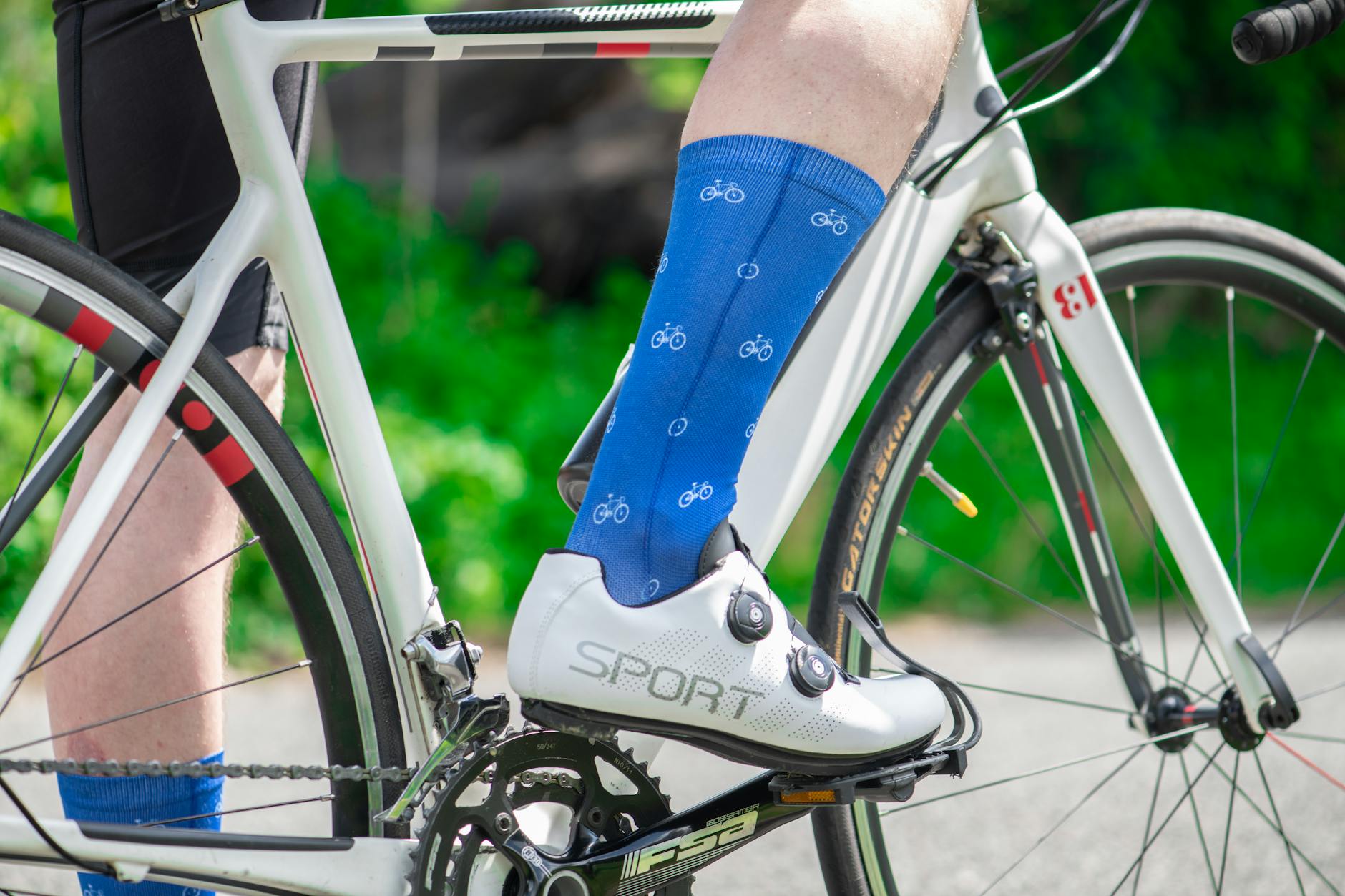
However, if you notice cracks in the rubber or significant dry rot, no amount of riding will restore the tire, and you should plan for replacement before doing extensive cleaning. The drivetrain deserves particular attention during this inspection phase. Rotate the pedals slowly backward and watch the chain as it passes through the rear derailleur. Listen for grinding sounds and feel for stiff links that cause the chain to jump. Check the brake pads for hardening by pressing a fingernail into the pad surface; it should leave a slight impression. Hardened pads will provide reduced stopping power and may need replacement regardless of their remaining thickness.
How Dried Lubricants Affect Bicycle Components
Lubricants work by maintaining a film between moving metal surfaces, but this film breaks down when the lubricant dries, oxidizes, or separates into its component parts. Chain lubricant left over winter typically loses its carrier oils and leaves behind a waxy or gummy residue that attracts dust but provides poor lubrication. Shifting becomes imprecise because this residue increases friction on cable housing and at pivot points throughout the derailleur system. The specific effects depend on the type of lubricant originally applied. Wet lubricants tend to stay viscous longer but attract more contamination, so a stored bike may have a grimy buildup that needs degreasing. Dry lubricants evaporate more completely, potentially leaving metal surfaces unprotected against corrosion.
Wax-based lubricants often fare better in storage because they form a solid barrier, but they can still crack and flake when subjected to temperature changes. For example, a bike stored with a premium wax chain treatment might emerge with visible white residue flaking off the chain, requiring complete removal and reapplication rather than simple re-lubrication. Grease in bearings and threaded connections behaves differently than chain lubricant. Quality grease maintains its properties for years if properly applied, but low-quality or insufficient grease may have allowed moisture ingress. Headset bearings are particularly vulnerable because they sit at the top of the frame where condensation collects. If your steering feels notchy or rough when you turn the handlebars during inspection, the headset bearings may have developed corrosion pitting that cleaning alone cannot address.

The Proper Sequence for Washing Your Stored Bicycle
The order of operations matters when cleaning a bike after storage because you want to avoid driving contamination into sensitive areas. Begin with the drivetrain before washing the frame, as degreasing the chain and cassette will splatter dirty solvent that you can then wash off during the general cleaning. Apply degreaser to the chain, cassette, chainrings, and derailleur pulleys, then let it penetrate for five to ten minutes while you prepare your wash bucket. Use a dedicated bike wash or mild dish soap diluted in water, not automotive degreasers or harsh detergents that can damage rubber seals and strip protective coatings. A soft brush or sponge works for the frame, while stiffer brushes help scrub the drivetrain. Work from top to bottom so dirty water runs down over areas you have not yet cleaned.
Pay particular attention to the areas behind the bottom bracket, inside the fork crown, and around brake calipers where grime accumulates. Rinsing requires care to avoid forcing water into bearings and sealed areas. Use a gentle stream from a hose or bucket rather than high-pressure spray. Direct the water away from headset, bottom bracket, and hub bearings. A common mistake is using a pressure washer to speed up the process, which can force water past seals designed to keep out road spray but not concentrated jets. After rinsing, dry the bike thoroughly with clean towels, particularly around bolt heads, cable stops, and other crevices where water collects.
Addressing Stuck Cables and Stiff Pivot Points
Shift and brake cables often become sluggish during storage as the lubricant inside the housing dries and the cables develop friction against the housing walls. You can often restore smooth operation by applying a light penetrating lubricant to the cable where it enters each housing section, then working the shifters and brake levers repeatedly to distribute the lubricant. For derailleur cables, shift through all gears multiple times while applying drops of lubricant at each housing junction. However, if cables remain sticky after lubrication, or if you notice fraying or kinks, replacement is the better option. A cable that has corroded inside the housing will never operate smoothly regardless of how much lubricant you apply.
The cost of new cables is modest, and the performance improvement is significant. Many riders treat post-storage maintenance as an opportunity to replace cables and housing as preventive maintenance, particularly if the originals have been in service for more than two seasons. Derailleur and brake pivot points benefit from a different approach than cables. Apply a heavier lubricant like a light grease or wet-style chain lubricant to the pivot bolts, then work the mechanism through its full range of motion. The rear derailleur parallelogram, front derailleur swing, and brake caliper pivots all need this attention. For sealed pivot points common on higher-end brakes, a drop of light oil around the seal is sufficient; do not attempt to disassemble sealed pivots unless you have specific experience with that component.

Tire and Tube Considerations After Long Storage
Tires and tubes degrade during storage even without being ridden because rubber compounds continue to oxidize and lose plasticizers. Inflate tires to their recommended pressure and inspect for bulges, which indicate internal damage to the tire casing. A tire that holds air but shows a visible bulge when inflated has suffered a broken belt or compromised sidewall and should be replaced before riding. The risk of catastrophic failure is significant, particularly on descents or in corners. Tubes that have been stored deflated or partially inflated sometimes develop creases that become weak points. Inflate the tubes inside the tires and check that pressure holds over several hours.
A slow leak after storage often indicates a tube crease that has cracked rather than a new puncture. While these can sometimes be patched, replacement is more reliable for tubes that have developed multiple crease points. For example, a tube stored at low pressure in a folded position might hold air initially but develop leaks along the crease lines after the first few rides as the rubber flexes. Latex tubes require particular attention after storage. Their higher air permeability means they deflate faster than butyl tubes, and extended storage at zero pressure can cause the latex to stick to itself or to the tire casing. Inflate stored latex tubes carefully, adding pressure gradually and checking for areas where the tube may have bonded. If resistance is felt during inflation, deflate and apply talcum powder to the tube surface before reinflating to prevent pinching.
Brake System Cleaning and Adjustment
Brake performance is critical to safe riding, and storage can degrade both the friction surfaces and the mechanical components of your braking system. For rim brakes, clean the brake track on each wheel with isopropyl alcohol to remove any oxidation or residue, then inspect the brake pads for hardening, embedded debris, and proper toe-in adjustment. Hardened pads often develop a shiny, glazed surface that should be removed by lightly sanding with medium-grit sandpaper. Disc brake systems require different considerations. The rotors should be cleaned with isopropyl alcohol or a dedicated disc brake cleaner, never with degreasers or lubricants that can contaminate the braking surface. Contaminated disc brake pads cannot be restored and must be replaced, which makes careful cleaning essential.
Check that the calipers are properly centered over the rotors and that the pistons move smoothly when the lever is squeezed. Sticky pistons are common after storage and may require cleaning with the pads removed. Hydraulic brake systems may have developed air bubbles in the lines during storage, particularly if the bike was stored in an unusual position. Symptoms include a spongy lever feel or a lever that can be pulled closer to the handlebar than normal. Bleeding hydraulic brakes requires specific fluid for your brake model and a basic bleed kit. If you are uncomfortable with this procedure, it is reasonable work for a shop to perform before your first rides of the season.
How to Prepare
- Assemble your cleaning supplies in a well-ventilated area with access to water. You will need bike-specific degreaser, bike wash or mild soap, several brushes of varying stiffness, clean rags, a bucket, and a hose or large water container. Avoid using automotive products designed for painted metal, as they may damage rubber components.
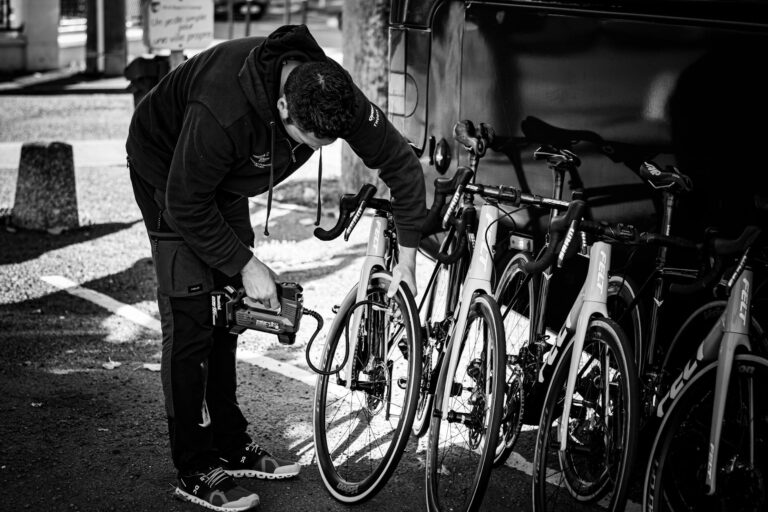
- Set up a bike stand if available, which allows you to rotate the pedals during drivetrain cleaning and provides better access to the underside of the frame. If no stand is available, lean the bike against a wall or have a helper hold it steady. Never clean a bike lying flat, as this causes dirty water to pool in frame openings.
- Remove accessories and bags that would impede cleaning or be damaged by water. This includes computers, lights, saddlebags, and bottle cages if they are difficult to clean around. Removing the wheels allows better access to the frame and brakes, though this is optional for basic cleaning.
- Photograph any existing damage, corrosion, or wear before cleaning so you have a reference for comparison afterward. This is particularly useful for identifying whether issues were present before storage or developed during the cleaning process.
- Warning: Do not clean your bike in direct sunlight or on a hot day when the frame is warm, as cleaning products will dry too quickly and leave residue. Similarly, avoid cleaning when temperatures are near freezing, as water trapped in components can freeze and cause damage.
How to Apply This
- Ensure the bike is completely dry before applying any lubricant, as water trapped under lubricant promotes corrosion rather than preventing it. Use compressed air if available to blow water out of cable stops, derailleur pivots, and other crevices where it collects.
- Apply chain lubricant by placing a drop on each roller while slowly rotating the pedals backward. One full rotation of the chain is sufficient. Allow the lubricant to penetrate for five minutes, then wipe off the excess with a clean rag. The lubricant should remain inside the rollers, not on the outer plates where it attracts contamination.
- Lubricate derailleur pivot points, brake pivots, and any other moving components with a light machine oil or the same lubricant used on the chain. Work each component through its full range of motion to distribute the lubricant. Wipe away any excess that could attract dirt.
- Apply a thin film of frame protectant or light oil to bare metal surfaces, quick-release levers, and other areas prone to corrosion. This is particularly important for steel frames, which benefit from a protective coating on unpainted surfaces like the inside of the seat tube.
Expert Tips
- Clean the inside of your rims or disc rotors with isopropyl alcohol as a final step, as any lubricant overspray will significantly reduce braking performance and is difficult to detect visually.
- Do not lubricate brake pad surfaces, brake tracks, or disc rotors under any circumstances; contamination from lubricants cannot be fully removed and will compromise braking until pads and potentially rotors are replaced.
- Rotate through different chain lubricant types seasonally rather than mixing them; applying wet lube over dry lube or vice versa creates a gummy mixture that performs worse than either product alone.
- Check quick-release and thru-axle function after cleaning, as these safety-critical components can collect debris or lose proper engagement if overtightened during storage.
- Store your degreaser and lubricant bottles upside down overnight before the cleaning session to ensure the contents are fully mixed and dispensers are primed, which is particularly important for wax-based products that can settle.
Conclusion
Cleaning your bike after winter storage is more than cosmetic maintenance; it restores the mechanical function that deteriorates when lubricants dry, seals stiffen, and corrosion develops on unprotected surfaces. The process requires attention to both visible grime and the hidden degradation that occurs inside cables, around bearings, and within the chain rollers. Taking time to properly degrease, wash, dry, and lubricate your bike ensures that your first rides of the season feel smooth and safe rather than frustrating and potentially dangerous.
Your next steps should include a short test ride in a controlled environment to verify that shifting, braking, and wheel function perform as expected. Pay attention to any unusual noises, vibrations, or handling characteristics that might indicate problems not apparent during static inspection. Address any issues before longer rides, and consider scheduling a professional tune-up if you encounter problems beyond your comfort level to diagnose or repair. A bike properly cleaned and serviced after storage will provide reliable performance throughout the riding season ahead.
Frequently Asked Questions
How long does it typically take to see results?
Results vary depending on individual circumstances, but most people begin to see meaningful progress within 4-8 weeks of consistent effort. Patience and persistence are key factors in achieving lasting outcomes.
Is this approach suitable for beginners?
Yes, this approach works well for beginners when implemented gradually. Starting with the fundamentals and building up over time leads to better long-term results than trying to do everything at once.
What are the most common mistakes to avoid?
The most common mistakes include rushing the process, skipping foundational steps, and failing to track progress. Taking a methodical approach and learning from both successes and setbacks leads to better outcomes.
How can I measure my progress effectively?
Set specific, measurable goals at the outset and track relevant metrics regularly. Keep a journal or log to document your journey, and periodically review your progress against your initial objectives.
When should I seek professional help?
Consider consulting a professional if you encounter persistent challenges, need specialized expertise, or want to accelerate your progress. Professional guidance can provide valuable insights and help you avoid costly mistakes.
What resources do you recommend for further learning?
Look for reputable sources in the field, including industry publications, expert blogs, and educational courses. Joining communities of practitioners can also provide valuable peer support and knowledge sharing.