A proper beginner BMX bike for skate park riding should have 20-inch wheels, a sturdy chromoly or hi-tensile steel frame, reliable U-brakes or disc brakes, and weigh under 25 pounds for riders aged 7-12. The sweet spot for a first skate park BMX sits between $200 and $400, where you get durable components without overspending on a bike your child might outgrow in two years. Bikes in this range, such as the Kink Curb or the Mongoose Legion L20, offer the structural integrity to handle drops and jumps while remaining forgiving enough for young riders still learning balance and control. Beyond the bike itself, preparing a child for skate park riding involves understanding park etiquette, selecting appropriate protective gear, and recognizing which features match their current skill level.
A child who has only ridden around the neighborhood faces a steep learning curve at even a modest concrete park. This article covers bike specifications, safety considerations, skill progression, common mistakes parents make when buying, and how to help young riders build confidence without pushing them toward injuries. The transition from riding a sidewalk cruiser to navigating a skate park bowl represents one of the bigger jumps in a young cyclist’s development. Parents who rush this process often end up with damaged bikes, discouraged kids, or both.
Table of Contents
- What Size BMX Bike Does a Beginner Need for Skate Park Riding?
- Brake Configuration and Gearing for Young Park Riders
- Essential Protective Gear Before the First Park Session
- Common Mistakes Parents Make When Buying a First Skate Park Bike
- Understanding Skate Park Etiquette for Young Riders
- Building Skills Before Attempting Bigger Features
- Conclusion
What Size BMX Bike Does a Beginner Need for Skate Park Riding?
Wheel size matters less than frame geometry and top tube length for skate park BMX bikes. Nearly all BMX bikes designed for park riding use 20-inch wheels regardless of rider height, but the top tube length should match the child‘s proportions. A rider between 4’0″ and 4’6″ typically needs an 18.5-inch top tube, while those between 4’6″ and 5’2″ fit better on a 19.5 to 20-inch top tube. An oversized frame makes the bike harder to maneuver in tight transitions, and an undersized frame cramps the rider’s stance and limits control. Frame material affects both weight and durability at the skate park.
Chromoly steel (also called 4130) offers the best strength-to-weight ratio but costs more. Hi-tensile steel works fine for beginners who aren’t yet attempting large drops or gaps, though it adds a pound or two to the overall weight. For context, a Kink Whip with a full chromoly frame weighs around 24 pounds, while a similar-looking hi-tensile bike might weigh 27 pounds. That three-pound difference becomes significant when a child tries to bunny hop onto a ledge or pull the bike up a quarter pipe. Unlike mountain bikes or road bikes, BMX bikes don’t have multiple frame sizes within a model line. Each model typically comes in one size, so matching the right bike to your child means comparing specifications across different models rather than simply sizing up or down within a single product family.
Brake Configuration and Gearing for Young Park Riders
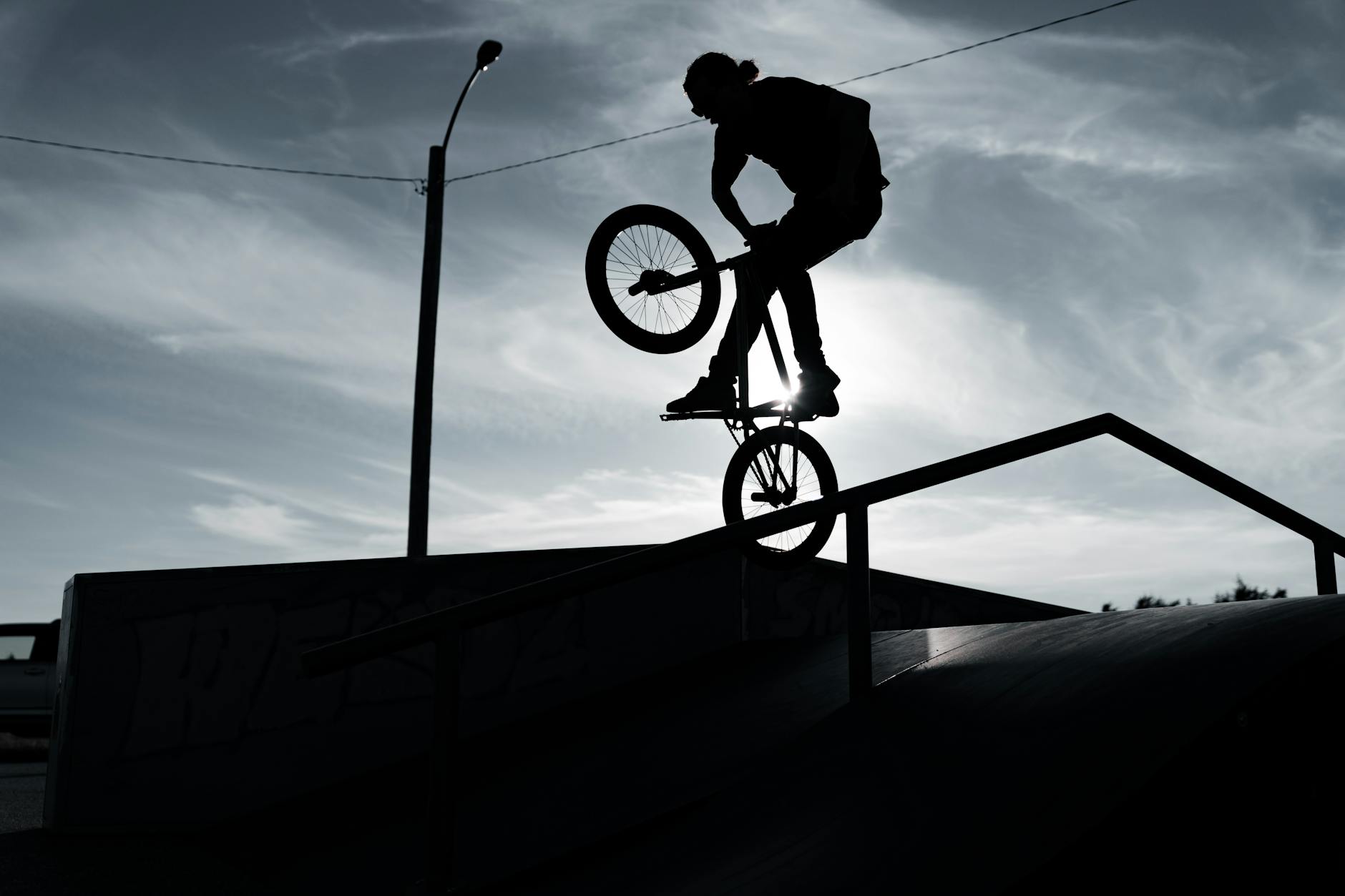
Most beginner-friendly skate park BMX bikes come with a rear U-brake only, though some entry-level models include both front and rear brakes. Single rear brake setups reduce weight and eliminate the risk of a child grabbing the front brake during a landing, which causes the back wheel to lift and throws the rider over the handlebars. However, if your child will also ride the bike to school or around the neighborhood, dual brakes provide safer stopping power for street conditions. Gearing on BMX bikes follows a simple single-speed design, typically with a gear ratio around 25:9 (25-tooth chainring, 9-tooth rear cog). This ratio provides enough low-end torque for pumping through transitions while allowing reasonable top-end speed.
Some parents consider adding a freecoaster hub, which allows the bike to roll backward without the pedals moving, but this adds complexity and expense that beginners don’t need. A standard cassette hub with a freewheel mechanism teaches better pedal awareness and body positioning. Brake lever placement should allow a child’s fingers to reach the lever without fully extending. Many stock levers on budget bikes position too far from the grip for smaller hands. Aftermarket levers with adjustable reach cost around $15-25 and represent one of the better upgrades for young riders.
Essential Protective Gear Before the First Park Session
A certified helmet rated for BMX or skateboarding remains non-negotiable, and full-face helmets deserve consideration for any rider attempting aerial maneuvers. The difference between a $30 helmet and a $70 helmet often comes down to ventilation, weight, and certification standards. Look for CPSC certification at minimum, with ASTM F1492 indicating the helmet specifically meets impact standards for BMX and skateboarding. Bell, Triple Eight, and Pro-Tec all make youth-specific helmets that fit smaller heads properly rather than simply offering smaller versions of adult designs. Knee pads and elbow pads prevent the abrasions and bruises that discourage new riders from continuing after early falls. Skate-style hard-cap pads offer better slide protection on concrete than the soft foam pads designed for inline skating. Wrist guards generate some debate in the BMX community, as they can restrict handlebar control, but for absolute beginners learning to fall properly, they prevent the sprains that result from instinctively catching oneself with outstretched hands. Closed-toe shoes with flat soles grip pedal platforms better than running shoes with curved soles or sandals that offer no protection. Skate shoes from brands like Vans or DC work well because their flat rubber outsoles match the platform pedal surface. Some parents invest in proper BMX shoes with reinforced toe boxes, but regular skate shoes suffice for beginners.
## How to choose Between New and Used Bikes for First-Time Riders The used market offers legitimate value for beginner BMX bikes, but inspection matters more than with used road or mountain bikes. Check the headset for play by squeezing the front brake and rocking the bike forward and backward. Any clicking or looseness indicates worn bearings that cost $20-50 to replace. Spin the wheels to check for wobbles indicating bent rims, and inspect the cranks where they meet the bottom bracket for any lateral movement. New bikes from reputable BMX brands like Kink, Sunday, Subrosa, or WeThePeople come with warranties and the assurance that components haven’t been stressed by previous riders. Department store bikes from Walmart or Target rarely use components durable enough for skate park riding, even for beginners. The welds, tubing thickness, and part quality on a $150 department store BMX won’t survive the repeated impacts of quarter pipe riding. The tradeoff comes down to budget versus peace of mind. A well-maintained used Haro or Fit bike at $200 might outperform a new $250 entry-level bike, but identifying “well-maintained” requires either personal expertise or bringing along someone who knows what to look for. When buying used, local bike shops that carry BMX brands often have trade-ins that have been inspected and adjusted.
Common Mistakes Parents Make When Buying a First Skate Park Bike
Oversizing represents the most frequent error. Parents buying a bike their child can “grow into” create handling problems that slow skill development and increase crash risk. A child on an oversized BMX struggles to lean the bike properly through transitions, can’t get adequate clearance when standing over the frame, and lacks the leverage to pull the front wheel up for basic maneuvers. It’s better to buy a properly sized bike now and replace it in two years than to struggle with an awkward fit. Overloading the bike with accessories before the child has ridden it wastes money and adds unnecessary weight.
Pegs, gyro brake systems, and aftermarket grips can wait until the rider develops preferences based on actual riding experience. A beginner doesn’t know whether they’ll gravitate toward grinding ledges (requiring pegs) or prefer aerial tricks (where pegs add weight for no benefit). Start with a stock bike and upgrade intentionally. Another pitfall involves assuming skate park riding matches what children see in video games or competition footage. Beginners at a skate park spend most of their time on the smallest features: gentle quarter pipes, low boxes, and flat ground. Purchasing a high-end bike because it’s what professionals ride ignores that professional-level components offer no advantage to a child learning to pump through a two-foot transition.
Understanding Skate Park Etiquette for Young Riders
Skate parks operate on unwritten rules that prevent collisions and share space fairly. The rider already in motion has the right of way, meaning a child waiting to drop in must watch for anyone approaching their intended line. “Snaking,” or cutting in front of another rider’s path, creates conflict and danger. Before a first park visit, watch videos of skate park sessions with your child and discuss the flow of riders taking turns.
Many parks have quieter hours when beginners face less pressure from experienced riders. Early weekend mornings, weekday afternoons after school, and summer evenings before sunset often provide friendlier conditions for learning. Visiting during peak hours on a Saturday afternoon puts a new rider in the way of teenagers and adults attempting technical lines at higher speeds. Starting at a smaller or less popular park in your area allows a child to build confidence without the intimidation factor of crowded concrete bowls. Some cities have modular skate parks with smaller features specifically designed for beginners, while larger destination parks cater to experienced riders who have less patience for wobbly newcomers.
Building Skills Before Attempting Bigger Features
Skill progression on a BMX bike follows a predictable pattern, and skipping steps leads to crashes that could have been avoided. Flat ground skills come first: balancing at slow speeds, hopping the front wheel over small obstacles, and braking smoothly. Only after these become automatic should a child attempt even the smallest ramp. A rider who can’t track stand for ten seconds lacks the balance control needed to navigate transitions. The pump technique, where a rider generates speed by pushing into transitions rather than pedaling, forms the foundation of all skate park riding.
Learning to pump on a small quarter pipe or roller section teaches timing and body positioning that applies to every other park feature. Many local BMX coaches or bike shops offer beginner clinics specifically focused on pump technique, and two hours of instruction often accelerates progress more than weeks of trial and error. Documenting progress with short video clips helps identify habits that limit advancement. What feels correct to the rider often looks different on camera, revealing issues like leaning back too early on transitions or not fully extending through pumps. These self-review sessions, when kept brief and constructive, turn frustrating plateaus into specific areas for improvement.
Conclusion
Selecting a BMX bike for a child’s first skate park experience requires balancing durability, proper sizing, and reasonable cost. The $200-400 range from established BMX brands provides components capable of handling beginner-level park riding without the expense of professional-grade parts a young rider can’t yet utilize. Chromoly frames, reliable braking systems, and appropriate top tube lengths matter more than flashy graphics or brand prestige.
Beyond the bike, successful introduction to skate park riding depends on proper protective gear, patient skill building, and respecting the park’s social dynamics. Starting with flat ground fundamentals, progressing to pump technique on small transitions, and allowing the child to set their own pace prevents the discouragement that sidelines many young riders after early setbacks. The goal isn’t producing a competitive BMX rider but giving a child the tools and confidence to enjoy a unique form of cycling that builds balance, spatial awareness, and persistence.


