Learning how to improve your road bike time trial performance represents one of the most rewarding pursuits in cycling, combining elements of physical conditioning, technical skill, equipment optimization, and mental fortitude into a single measurable result. The time trial, often called “the race of truth,” strips away the variables of pack riding, tactical positioning, and drafting to reveal exactly how fast a rider can propel themselves over a set distance. This purity makes time trialing both brutally honest and deeply satisfying””every second gained reflects genuine improvement. Time trials present unique challenges that differ substantially from road racing or group riding. The sustained effort required to maintain maximum sustainable power for 10, 20, or 40 kilometers demands specific physiological adaptations, while the aerodynamic considerations become paramount when there are no other riders to shelter behind.
Many cyclists find themselves frustrated by plateaued performances despite putting in significant training hours, often because they haven’t addressed the specific demands of individual time trialing. Whether struggling with pacing strategy, aerodynamic positioning, equipment choices, or the mental challenge of sustained suffering, riders frequently leave significant time on the course. This article provides a comprehensive examination of every factor that influences time trial speed, from the physiological foundations of sustained power output to the marginal gains available through equipment and positioning refinements. Readers will learn how to structure training specifically for time trial demands, how to optimize their position for aerodynamic efficiency, how to develop effective pacing strategies, and how to prepare mentally for the unique challenges of racing against the clock. By the end, you will have a complete framework for systematically improving your time trial performances, regardless of your current level.
Table of Contents
- What Makes Road Bike Time Trial Performance Different from Other Cycling Disciplines?
- Training Methods for Improving Time Trial Power and Endurance
- Aerodynamic Positioning and Bike Fit for Time Trial Speed
- Equipment Choices to Maximize Time Trial Performance
- Pacing Strategy and Power Management in Time Trials
- Recovery and Periodization for Consistent Time Trial Improvement
- How to Prepare
- How to Apply This
- Expert Tips
- Conclusion
- Frequently Asked Questions
What Makes Road Bike Time Trial Performance Different from Other Cycling Disciplines?
Understanding what distinguishes time trial performance from other forms of cycling is essential before attempting to improve it. In a road race or criterium, drafting behind other riders can reduce air resistance by 25-40%, allowing racers to conserve energy and rely on tactical acumen as much as raw fitness. Time trials eliminate this advantage entirely, meaning that aerodynamic drag””which accounts for roughly 80-90% of resistance at speeds above 25 kilometers per hour””becomes the dominant factor a rider must overcome. This fundamental physics reality shapes every aspect of time trial preparation and execution. The physiological demands also differ significantly from mass-start events. While road races feature variable intensities with surges, recoveries, and tactical considerations, time trials require the ability to sustain the highest possible power output for the entire duration.
This typically means riding at or slightly below functional threshold power (FTP)””the maximum power a rider can theoretically maintain for one hour. For shorter time trials of 10-20 kilometers, riders may exceed their FTP by 5-10%, while longer events require more conservative pacing. This sustained, near-maximal effort places unique stresses on both aerobic and anaerobic energy systems. The equipment differences are equally pronounced. Time trial bikes feature aggressive geometry designed to place the rider in a more aerodynamic position, with integrated cockpits, deep-section or disc wheels, and frame shapes optimized for airflow rather than weight savings. Even when riding a standard road bike, time trial performance requires attention to aerodynamic details that matter far less in draft-legal racing. Understanding these distinctions is the first step toward improving your time trial results.
- **Aerobic capacity and efficiency** form the foundation, but the ability to buffer lactate and maintain power as fatigue accumulates becomes crucial
- **Neuromuscular fatigue resistance** determines whether a rider can maintain their target power in the final kilometers when muscles are screaming for relief
- **Mental resilience** separates those who can push through discomfort from those who unconsciously back off when the effort becomes truly painful

Training Methods for Improving Time Trial Power and Endurance
Effective time trial training centers on developing the ability to sustain high power outputs for extended periods, which requires a structured approach to building both aerobic base and threshold capacity. The most successful time trialists typically follow periodized training plans that progress from general endurance work through increasingly specific threshold and race-pace intervals. Base training periods emphasize longer rides at moderate intensities to develop mitochondrial density, capillary networks, and fat oxidation capacity””the aerobic foundation that supports higher-intensity efforts. Threshold training represents the most specific preparation for time trial racing. Intervals performed at 95-105% of FTP teach the body to process lactate efficiently while developing the mental familiarity with sustained hard effort.
Classic threshold workouts include 2×20 minutes at FTP, 3×15 minutes with short recoveries, or longer continuous efforts building toward 40-60 minutes at race pace. Research indicates that the total time accumulated at threshold intensity correlates strongly with improvements in time trial performance, with most coaches recommending 60-90 minutes of threshold work per week during build phases. The specificity principle demands that training increasingly mirrors race demands as events approach. During the final 4-6 weeks before a target time trial, workouts should include efforts at precise race power targets, ideally performed in race position on time trial equipment. This specificity ensures that physiological adaptations, neuromuscular patterns, and mental preparation align with actual racing requirements. Many riders make the mistake of training exclusively with road bikes and positions, then struggling to maintain power when they adopt a more aggressive time trial position on race day.
- **Sweet spot training** (88-94% of FTP) allows for greater training volume while still stimulating threshold adaptations, making it particularly valuable during base and early build periods
- **VO2max intervals** (3-8 minute efforts at 105-120% of FTP) raise the ceiling on aerobic capacity, which in turn supports higher sustainable power outputs
- **Race simulation efforts** lasting 75-100% of target race duration help calibrate pacing and build confidence in the ability to execute race-day power targets
Aerodynamic Positioning and Bike Fit for Time Trial Speed
Aerodynamic drag is the primary force opposing forward motion at time trial speeds, making position optimization potentially more valuable than fitness gains for many riders. Wind tunnel testing and computational fluid dynamics studies have shown that rider position accounts for approximately 70-80% of total aerodynamic drag, with the bicycle and equipment contributing the remainder. This reality means that relatively small changes in position can yield substantial time savings””a reduction in frontal area or improvement in airflow around the body often delivers more benefit than expensive equipment upgrades. The fundamental goal of time trial positioning is to minimize frontal area while maintaining the ability to produce power and sustain the position for the entire race duration. This typically involves lowering the torso, narrowing the shoulders, and positioning the head and arms to create a smooth airflow path.
However, overly aggressive positions often backfire: research consistently shows that power output decreases when riders adopt positions beyond their flexibility and core strength capabilities. The optimal time trial position balances aerodynamic efficiency against sustainable power production, and this balance varies significantly between individuals based on their physiology and training background. professional bike fitting for time trials has become increasingly sophisticated, with many fitters now using real-time aerodynamic measurement systems alongside traditional power and comfort assessments. Even without access to wind tunnel testing, riders can improve their positions through video analysis, systematic experimentation on training rides, and attention to sustainable comfort over race durations. A position that feels fast but cannot be maintained for the entire time trial will always be slower than a slightly less aggressive position held consistently.
- **Saddle position** affects both aerodynamics and power production, with many time trialists benefiting from a slight forward shift to open the hip angle in aggressive positions
- **Arm pad width and extension reach** should be dialed in to achieve the narrowest comfortable position while allowing full lung expansion for breathing
- **Head position** dramatically impacts drag, with a neutral spine alignment and eyes looking forward through the eyebrows generally proving both aerodynamic and sustainable
- **Bar height** represents the most visible position variable, but chasing excessive drop without the flexibility to support it typically costs more power than the aerodynamic benefit provides
Equipment Choices to Maximize Time Trial Performance
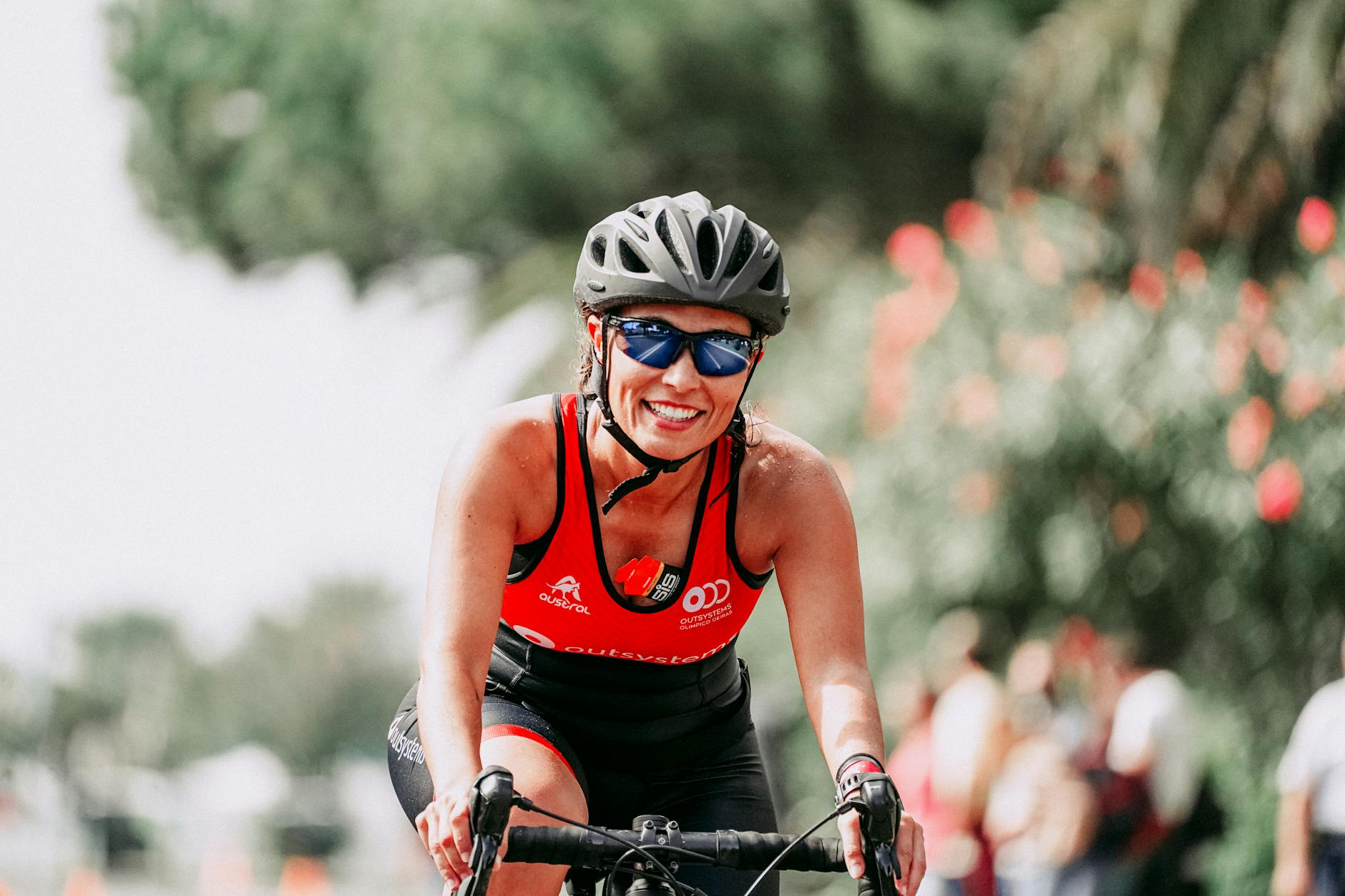
Equipment selection for time trials follows a clear hierarchy of impact, and understanding this hierarchy helps riders allocate limited budgets effectively. Wheels typically offer the greatest aerodynamic return on investment, with deep-section carbon rims reducing drag significantly compared to standard box-section rims. Studies suggest that a set of 60-80mm deep wheels can save 30-60 seconds over 40 kilometers compared to shallow wheels, making this one of the most cost-effective upgrades available. Disc wheels provide additional benefits on the rear, though they become difficult to handle in crosswinds. Helmets rank as the second most impactful equipment choice, with aero helmets reducing drag by a meaningful margin compared to standard road helmets.
The key consideration is finding a helmet that works with your actual head position””a long-tail aero helmet provides maximum benefit only when the tail aligns with the back, which requires a relatively flat torso angle. Riders who look up frequently or cannot maintain an aggressive position often perform better with short-tail or time trial-specific road helmets that remain aerodynamic across a range of head positions. Time trial bike versus road bike with clip-on aerobars represents a common equipment decision, particularly for riders who compete in both disciplines. Dedicated time trial frames place riders in more aerodynamic positions by design, with steeper seat tube angles, lower front ends, and optimized tube profiles. However, a well-fitted road bike with quality clip-on aerobars can achieve 85-90% of the aerodynamic benefit at a fraction of the cost, making it a sensible choice for riders prioritizing versatility or operating on limited budgets.
- **Skinsuits** fitted properly create a smoother surface than separate jersey and shorts while eliminating the flapping fabric that creates turbulence at high speeds
- **Overshoes** or integrated shoe covers reduce the drag created by standard cycling shoes, particularly those with exposed buckles or straps
- **Frame and fork aerodynamics** matter but provide diminishing returns compared to fit and wheel choices on equal budgets
- **Integrated cockpits** with hidden cables improve airflow through the front of the bike while also creating a cleaner aesthetic
Pacing Strategy and Power Management in Time Trials
Pacing represents one of the most misunderstood aspects of time trial performance, with research consistently demonstrating that even pacing or slightly negative splits produce faster times than starting hard and fading. The physiological explanation relates to the exponential relationship between power output and energy expenditure: riding 10 watts above your sustainable power costs disproportionately more energy than riding 10 watts below saves. This means that surges above target power early in a race create oxygen debts and lactate accumulation that cannot be recovered, resulting in dramatically slower final kilometers. The ideal pacing strategy for flat time trials involves starting at race power (not above), settling into a sustainable rhythm within the first 1-2 kilometers, and preserving the ability to maintain or slightly increase effort over the final third of the race.
Power meter data from successful time trials typically shows remarkably consistent output, with variations of only 5-10 watts around the target number. Heart rate data, in contrast, often shows a gradual rise throughout the effort as cardiac drift occurs””this is normal and expected, and riders should not reduce power in response to elevated heart rate. Mental strategies for maintaining effort when fatigue accumulates include breaking the race into smaller segments, focusing on pedaling technique, using pre-planned self-talk cues, and developing acceptance of discomfort rather than resistance to it. Many experienced time trialists describe entering a meditative state where attention narrows to the immediate physical sensations and the next pedal stroke, rather than dwelling on remaining distance or the desire to stop. This psychological skill can be developed through training, particularly by including race-simulation efforts that extend into the fatigue zone where mental fortitude becomes decisive.
- **Course knowledge** enables intelligent pacing adjustments, with slightly reduced power on climbs (where aerodynamics matter less) compensated by increased effort on descents and tailwind sections
- **Perceived exertion calibration** through training helps riders recognize the sensation of sustainable effort versus the false confidence of adrenaline-fueled early racing
- **Power meter reliability** becomes crucial for execution, making regular calibration and familiarity with your specific device essential race preparation
Recovery and Periodization for Consistent Time Trial Improvement
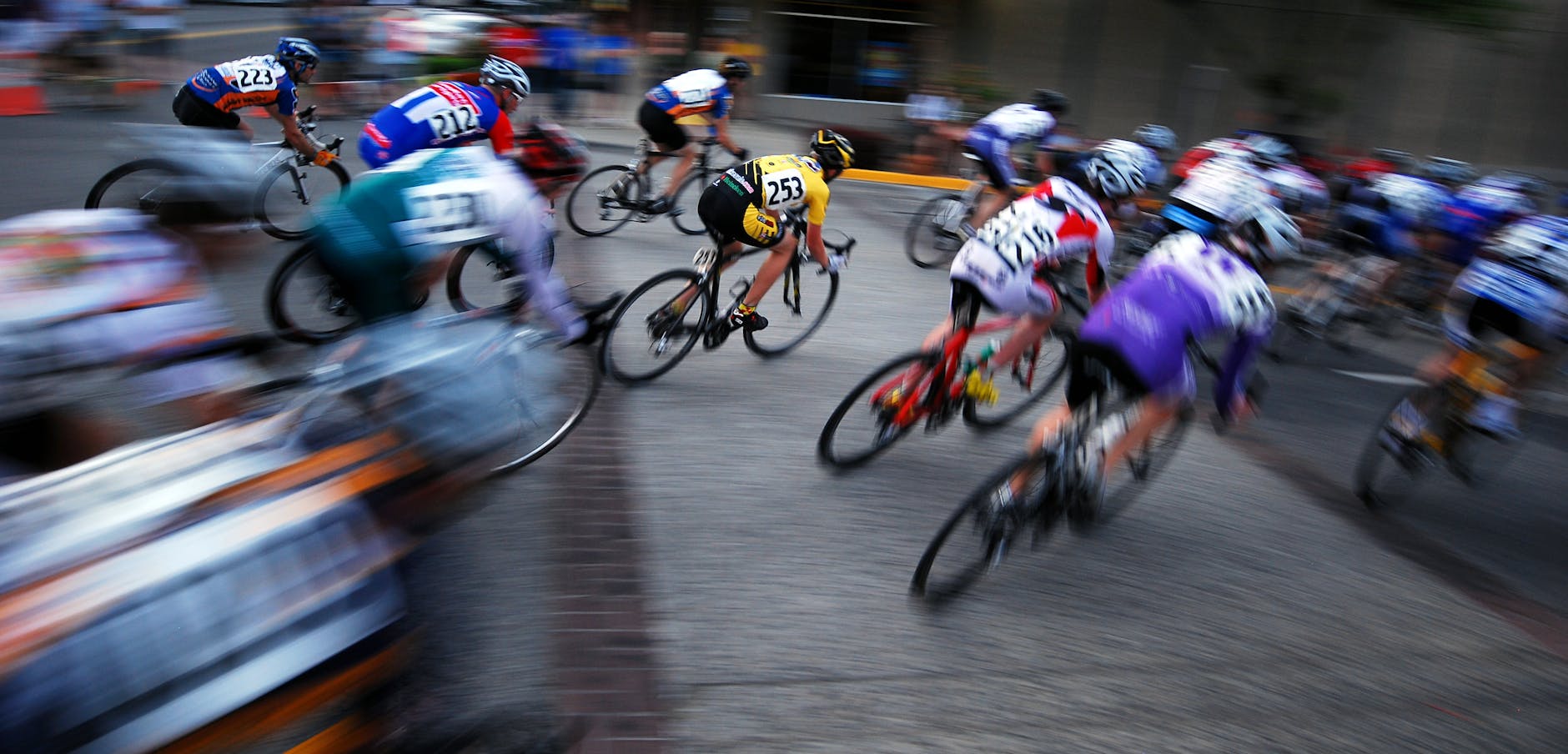
Sustainable improvement in time trial performance requires attention to recovery and long-term periodization, not just the hard training sessions themselves. Adaptation to training stress occurs during rest, making recovery as important as the workouts that stimulate it. Time trialists pushing threshold intensities multiple times per week need adequate sleep (typically 7-9 hours for athletes), appropriate nutrition timing around hard sessions, and planned easy days that allow the body to absorb training stress.
Chronic under-recovery leads to stagnation or regression, even when training volume and intensity appear appropriate. Periodization structures training into phases that build upon each other, typically progressing from general preparation through specific preparation to competition phases and subsequent recovery periods. Annual planning for time trialists should identify priority races, then work backward to ensure appropriate training emphasis at each stage of preparation. This might involve 8-12 weeks of aerobic base building, 6-8 weeks of threshold emphasis, 4-6 weeks of race-specific preparation, and planned recovery weeks every 3-4 weeks throughout the process.
- **Tapering** before important time trials reduces training load by 40-60% while maintaining some intensity, allowing the body to consolidate fitness gains while arriving at the start line fresh
- **Race frequency** should be managed to avoid the accumulated fatigue that comes from too many maximal efforts without recovery
- **Off-season periods** with reduced structure and intensity prevent burnout while maintaining basic fitness for the following year’s preparation
How to Prepare
- **Conduct course reconnaissance 1-2 weeks before the event** by riding the actual course or studying it via video and GPS data. Note significant features including turns, surface changes, gradients, and typical wind patterns. This knowledge enables intelligent pacing and eliminates surprises on race day.
- **Perform equipment preparation 3-4 days before racing** including tire pressure optimization, brake adjustment, chain lubrication, and a thorough mechanical inspection. Install race wheels and verify shifting performance. Charge and calibrate your power meter, and ensure your cycling computer is programmed with target power zones and course information.
- **Finalize position and equipment choices** at least one week before the event, avoiding last-minute changes that might create unfamiliar sensations or mechanical issues. Any position modifications should be tested extensively in training before committing to them for racing.
- **Reduce training volume during the final week** while maintaining some intensity to keep the legs responsive. A common approach includes a short effort at race power 2-3 days before the event, followed by easy spinning. Total weekly volume typically drops to 40-60% of normal training loads.
- **Organize race-day logistics including warmup protocol, nutrition timing, and arrival schedule** to minimize stress and ensure adequate preparation time. Know your start time, plan to arrive 60-90 minutes early, and have a pre-race routine established through practice in training and lower-priority events.
How to Apply This
- **Execute a structured warmup beginning 45-60 minutes before your start time**, progressing from easy spinning through gradually increasing intensities to include 2-3 short efforts at race power. The warmup should leave you breathing slightly elevated and legs activated without creating fatigue.
- **Start at your target power immediately rather than exceeding it**, using the first 1-2 kilometers to establish your position, breathing rhythm, and sustainable effort level. Resist the urge to capitalize on fresh legs by going out too hard.
- **Monitor power output continuously while managing the mental challenge** of sustained effort, using pre-planned strategies to maintain focus when fatigue accumulates. Break the race into manageable segments and commit to executing each section at your target intensity.
- **Finish with a proper cooldown and post-race analysis**, including easy spinning to flush metabolic byproducts and subsequent review of power data, pacing execution, and positioning. Identify opportunities for improvement and incorporate lessons into future training and racing.
Expert Tips
- **Practice your race position extensively in training** so that it feels natural and sustainable on race day. The time trial position should be something you can hold without conscious effort for the entire race duration””if you find yourself constantly adjusting or shifting, the position needs refinement.
- **Develop a pre-race routine that you follow consistently** to reduce anxiety and ensure optimal preparation. This routine should include warmup timing, nutrition consumption, equipment checks, and mental preparation, practiced until it becomes automatic.
- **Use training races and lower-priority events** to experiment with pacing strategies, nutrition, equipment choices, and mental techniques before implementing them in goal events. Racing experience cannot be replicated in training.
- **Prioritize sleep in the 3-5 days before important events** rather than fixating on the night before, when pre-race anxiety often disrupts rest. Sleep debt accumulates over time, and a single poor night’s sleep has minimal impact if preceded by adequate rest.
- **Record and review power data from every time trial** to identify pacing patterns, establish baseline performances for specific courses, and track improvement over time. This objective feedback enables systematic refinement of strategy and execution.
Conclusion
Improving road bike time trial performance requires a comprehensive approach that addresses fitness, positioning, equipment, pacing, and mental preparation as interconnected elements rather than isolated variables. The riders who achieve the best results understand that marginal gains accumulate across all these domains, and they systematically work to optimize each area while recognizing the relative impact of different improvements. A rider with excellent fitness but poor positioning will be beaten by a slightly less fit competitor who has optimized their aerodynamics and perfected their pacing strategy.
The journey toward faster time trials rewards patience, analytical thinking, and consistent execution over time. Focus on developing your sustainable power output through structured training, refining your position to achieve the best balance between aerodynamics and power production, selecting equipment appropriate to your goals and budget, and developing the mental skills to execute your race plan when fatigue demands capitulation. Each time trial provides objective feedback on your progress and reveals opportunities for further improvement. With systematic attention to the factors outlined in this article, meaningful performance gains are achievable at every level of ability.
Frequently Asked Questions
How long does it typically take to see results?
Results vary depending on individual circumstances, but most people begin to see meaningful progress within 4-8 weeks of consistent effort. Patience and persistence are key factors in achieving lasting outcomes.
Is this approach suitable for beginners?
Yes, this approach works well for beginners when implemented gradually. Starting with the fundamentals and building up over time leads to better long-term results than trying to do everything at once.
What are the most common mistakes to avoid?
The most common mistakes include rushing the process, skipping foundational steps, and failing to track progress. Taking a methodical approach and learning from both successes and setbacks leads to better outcomes.
How can I measure my progress effectively?
Set specific, measurable goals at the outset and track relevant metrics regularly. Keep a journal or log to document your journey, and periodically review your progress against your initial objectives.
When should I seek professional help?
Consider consulting a professional if you encounter persistent challenges, need specialized expertise, or want to accelerate your progress. Professional guidance can provide valuable insights and help you avoid costly mistakes.
What resources do you recommend for further learning?
Look for reputable sources in the field, including industry publications, expert blogs, and educational courses. Joining communities of practitioners can also provide valuable peer support and knowledge sharing.


