Learning how to fix common bicycle brake problems at home is an essential skill that every cyclist should develop, regardless of experience level. Brakes represent the single most critical safety system on any bicycle, and their proper function can mean the difference between a controlled stop and a dangerous collision. When brakes begin to squeal, feel spongy, or fail to engage properly, the temptation to ignore minor issues often leads to more serious mechanical failures down the road. Understanding basic brake maintenance and repair empowers cyclists to address problems promptly, saving both money on shop visits and ensuring safer rides. The problems cyclists encounter with their brakes span a wide spectrum, from simple pad wear to complex hydraulic system issues. Rim brakes may develop squealing or reduced stopping power due to contaminated pads or misaligned calipers.
Disc brakes can suffer from rotor contamination, air bubbles in hydraulic lines, or warped rotors that cause pulsing during stops. Cable-actuated systems frequently experience decreased performance from stretched or frayed cables and housing that has accumulated moisture or debris. Each of these issues presents distinct symptoms and requires specific diagnostic approaches, but nearly all can be resolved with basic tools and a methodical troubleshooting process. By the end of this guide, readers will possess the knowledge to identify the root cause of most brake problems, understand the tools and techniques required for repair, and confidently perform maintenance that keeps their braking systems in optimal condition. The information covers both rim and disc brake systems, addresses mechanical and hydraulic variants, and provides step-by-step procedures for the most common repairs. Whether dealing with a brand-new bike that needs initial setup adjustments or an older machine showing signs of wear, this comprehensive resource delivers practical solutions for home mechanics at every skill level.
Table of Contents
- What Causes Bicycle Brake Problems and How Can You Diagnose Them at Home?
- Essential Tools for Home Bicycle Brake Repair
- How to Fix Squealing Bicycle Brakes at Home
- Fixing Bicycle Brake Cable and Lever Problems
- Troubleshooting Hydraulic Disc Brake Issues at Home
- Maintaining Disc Brake Rotors and Preventing Contamination
- How to Prepare
- How to Apply This
- Expert Tips
- Conclusion
- Frequently Asked Questions
What Causes Bicycle Brake Problems and How Can You Diagnose Them at Home?
bicycle brake problems typically stem from a handful of common causes that experienced mechanics learn to recognize quickly. Contamination ranks among the most frequent culprits, whether from road grime accumulating on rim brake pads, oil transferring to disc brake rotors from fingerprints or chain lubricant, or moisture infiltrating cable housing. Wear represents another major factor, as brake pads gradually lose material through normal use, cables stretch under repeated tension, and rotors thin from thousands of braking cycles. Misalignment issues often develop after wheel removal, crash impacts, or simply through vibration and use over time. Finally, component failure from age, fatigue, or manufacturing defects can cause sudden brake problems that require part replacement rather than adjustment.
Diagnosing brake issues begins with observation and systematic testing. Visual inspection reveals obvious problems like worn pads showing metal backing, frayed cables poking through housing ends, or rotors with visible contamination or scoring. Spinning the wheel while watching the brake components shows alignment issues such as pads rubbing on one side of a rim or rotors wobbling between caliper pistons. Squeezing the brake lever provides tactile feedback about system condition: excessive lever travel suggests worn pads, stretched cables, or air in hydraulic lines, while a firm but weak feel points toward contamination or glazed friction surfaces. Strange noises during braking offer additional clues, with squealing often indicating contamination or vibration, grinding suggesting metal-on-metal contact from worn pads, and clicking pointing toward loose hardware.
- Contamination from oil, road grime, or cleaning products degrades friction material and reduces stopping power significantly
- Cable stretch and housing compression create excessive lever travel and delayed brake engagement
- Pad wear beyond minimum thickness indicators causes reduced braking force and potential rotor or rim damage
- Misalignment results in uneven pad wear, noise, and reduced efficiency from brake drag
- Air bubbles in hydraulic systems create spongy lever feel and inconsistent braking response

Essential Tools for Home Bicycle Brake Repair
Tackling brake repairs at home requires a modest collection of tools that most cyclists accumulate naturally over time. The foundation includes a set of hex keys (Allen wrenches) in sizes from 2mm to 8mm, as these fasteners appear throughout modern brake systems on caliper mounts, cable anchors, and lever clamps. A quality set of cable cutters designed specifically for bicycle cables produces clean cuts that prevent fraying and allow smooth passage through housing. Needle-nose pliers help with cable management and removing small components, while a torque wrench prevents over-tightening critical fasteners to manufacturer specifications. For disc brake work, a dedicated rotor truing tool or adjustable wrench enables straightening minor warps, and a set of plastic tire levers can safely push pistons back into calipers without damaging seals.
Specialized tools become necessary for more advanced repairs, particularly with hydraulic disc brake systems. Brake bleed kits specific to the brake manufacturer contain the correct fittings, syringes, and fluid reservoirs for purging air from hydraulic lines. Shimano brakes use mineral oil and require different equipment than SRAM or similar systems that use DOT fluid, making it essential to match the bleed kit to the brake brand. A brake pad spreader or flat plastic tool allows safe piston retraction without scoring cylinder bores. Isopropyl alcohol in high concentration (90% or above) serves as a safe cleaning agent for contaminated rotors and pads. A work stand that holds the bike stable at a comfortable height transforms brake work from a frustrating floor exercise into a manageable task.
- Hex key set (2-8mm) handles nearly all brake system fasteners found on modern bicycles
- Cable cutters designed for bicycle cables create clean cuts that prevent fraying and binding
- Torque wrench prevents stripped threads and ensures components stay secure during rides
- Brake-specific bleed kit matches the fluid type and fittings required by your particular hydraulic system
- Isopropyl alcohol (90%+) safely cleans contaminated brake surfaces without leaving residue
How to Fix Squealing Bicycle Brakes at Home
Squealing brakes create an annoying soundtrack to every ride and often indicate underlying issues that affect braking performance. The noise typically results from vibration between the pad and braking surface, caused by contamination, improper alignment, or glazing of the friction material. Rim brake squeal frequently develops when pads contact the rim at an incorrect angle, creating a resonance that amplifies into an audible screech. Disc brake squeal can stem from contaminated rotors or pads, bedding-in issues with new components, or caliper alignment problems that cause the rotor to contact pads unevenly. Resolving rim brake squeal often requires adjusting pad toe-in, where the front edge of the pad contacts the rim slightly before the rear edge. This small angle, typically around 1mm of difference from front to back, prevents the vibration that causes noise.
Loosening the pad mounting bolt, inserting a thin piece of cardboard under the rear of the pad, tightening while the brake is applied, then removing the cardboard achieves this adjustment. Additionally, cleaning both the rim braking surface and pads with isopropyl alcohol removes contamination that contributes to noise. If pads have developed a glazed, shiny surface, light sanding with fine-grit sandpaper (around 200 grit) restores the texture needed for quiet, effective braking. Disc brake squeal demands a different approach focused on contamination removal and proper bedding. Contaminated disc pads often cannot be salvaged and require replacement, as the porous friction material absorbs oils that cannot be fully extracted. Rotors respond better to cleaning, with isopropyl alcohol applied to a clean rag removing surface contamination effectively. After cleaning or installing new pads, a proper bedding procedure creates an even transfer layer between pad and rotor: perform 20-30 moderate stops from medium speed, allowing the brakes to cool between sets of ten, avoiding any full lockups that could glaze the surfaces unevenly.
- Toe-in adjustment on rim brakes eliminates vibration-induced squeal by angling pad contact
- Isopropyl alcohol cleaning removes contamination causing noise without damaging brake surfaces
- Sanding glazed pads with fine-grit sandpaper restores friction material texture
- New disc brake pads require proper bedding to prevent noise and achieve full stopping power
- Contaminated disc pads often require replacement rather than attempted cleaning
Fixing Bicycle Brake Cable and Lever Problems
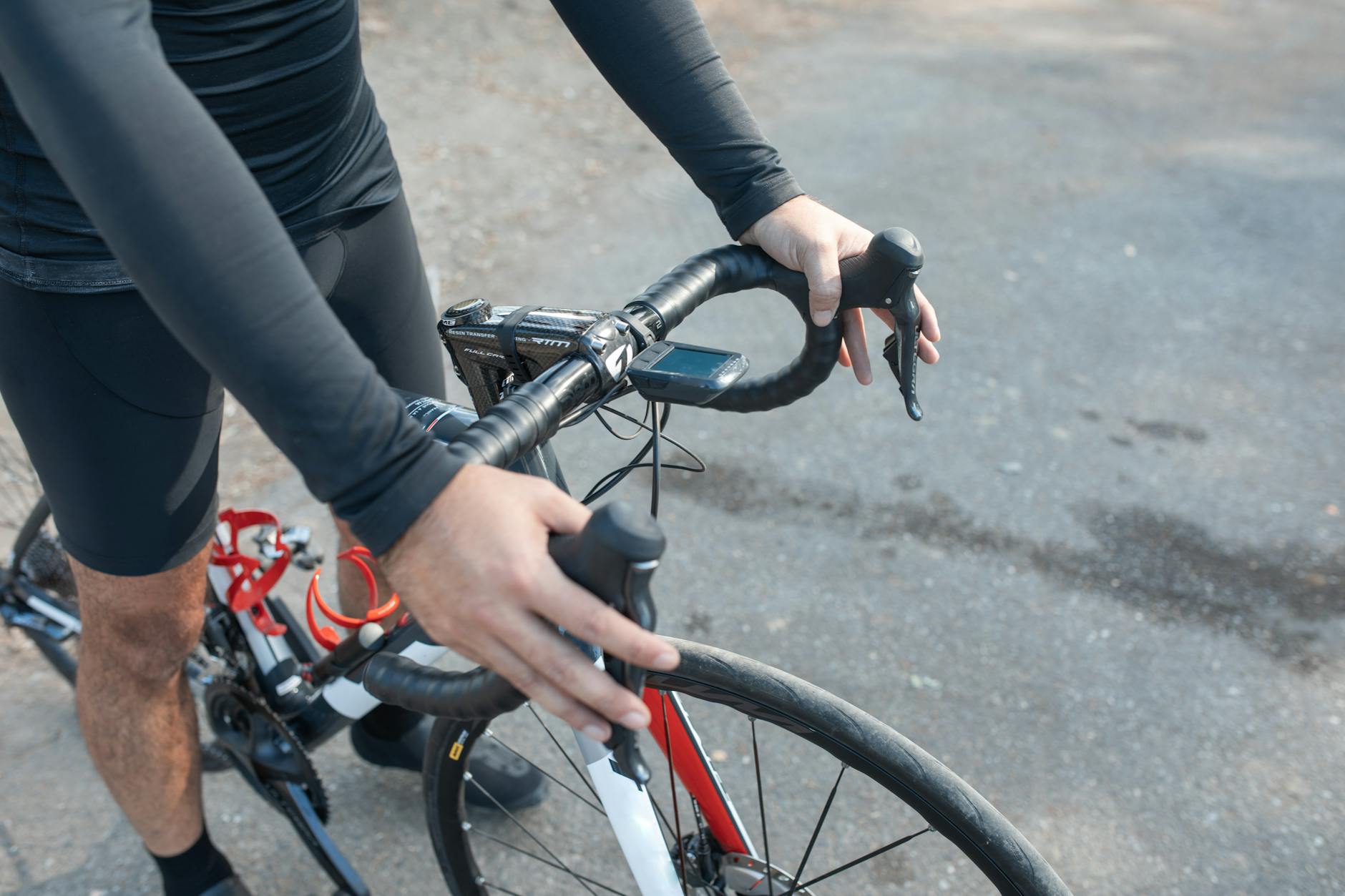
Cable-actuated brake systems rely on tension transmitted through steel cables running within protective housing to translate lever input into caliper movement. Over time, cables stretch, housing compresses, and the entire system develops slack that manifests as excessive lever travel before brakes engage. Frayed cables present both a performance and safety issue, as individual strands catch on housing ferrules and can fail completely under braking load. Corroded cables from moisture exposure move sluggishly through housing, creating inconsistent braking feel and delayed response that makes precise speed control difficult. Adjusting cable tension requires locating the barrel adjuster, typically found where the cable housing meets the brake lever or at the caliper itself. Turning the barrel adjuster counterclockwise effectively lengthens the housing, which takes up slack in the cable and brings the pads closer to the braking surface.
This adjustment compensates for moderate pad wear and minor cable stretch. When barrel adjustment reaches its limit, the cable anchor bolt at the caliper must be loosened, the cable pulled through to remove slack, and the anchor retightened. Proper technique involves squeezing the brake lever to set pad position, then pulling the cable taut with pliers before tightening, ensuring minimal free play in the system. Replacing cables and housing represents a more thorough solution for systems showing significant wear or contamination. Quality cables feature a polymer coating that reduces friction and resists corrosion, while compression-less housing maintains consistent performance regardless of cable routing curves. When routing new housing, aim for smooth curves without sharp bends that increase friction, and cut housing squarely with proper cutters to prevent cable fraying at entry points. After installation, working the brake lever repeatedly while watching the cable helps identify any binding points that need adjustment.
- Barrel adjusters provide easy cable tension adjustment to compensate for stretch and pad wear
- Cable anchor bolt adjustment allows taking up slack beyond barrel adjuster range
- Frayed cables require complete replacement before failure occurs during braking
- Compression-less housing maintains consistent lever feel regardless of frame routing
- New cable installations require checking for binding points that cause inconsistent braking
Troubleshooting Hydraulic Disc Brake Issues at Home
Hydraulic disc brakes deliver powerful, consistent stopping with minimal lever effort, but their sealed systems present unique troubleshooting challenges compared to mechanical alternatives. The most common hydraulic issue involves air contamination in the brake lines, which creates a spongy lever feel and inconsistent braking response. Air enters the system through normal use as seals age, during pad replacements if pistons retract too far, or when the bike is stored with wheels removed and brake levers squeezed. Unlike incompressible brake fluid, air bubbles compress under pressure, absorbing lever input that should transfer directly to piston movement. Bleeding hydraulic brakes removes air contamination and restores firm lever feel. The process involves forcing fresh fluid through the system from the caliper to the lever reservoir (or vice versa, depending on brake design), pushing air bubbles out as fluid fills the lines.
Specific procedures vary by manufacturer, with Shimano brakes using mineral oil and a funnel-based gravity bleed, while SRAM systems use DOT fluid and a syringe-pressure method. Using the correct fluid is critical, as mixing mineral oil and DOT fluid destroys seals and requires complete system replacement. Bleed procedures typically require 30-45 minutes once the technique is familiar, and results are immediately apparent in lever feel. Beyond air contamination, hydraulic systems can develop sticking pistons that cause uneven pad wear and brake drag. Pistons stick when contamination builds up around seals or when one piston becomes seized from corrosion. Cleaning around pistons with isopropyl alcohol and gently cycling them in and out using the lever (with pads removed and a block between pistons to prevent over-extension) often restores smooth action. Persistent sticking may indicate seal damage requiring caliper rebuild or replacement, a job that approaches the practical limits of home repair for most cyclists.
- Air in hydraulic lines causes spongy lever feel and requires bleeding to remove
- Brake fluid type must match manufacturer specifications exactly to prevent seal damage
- Sticking pistons cause uneven pad wear and brake drag that worsens over time
- Piston cleaning and cycling often restores smooth action without requiring seal replacement
- Complete system bleeding takes 30-45 minutes once the procedure becomes familiar

Maintaining Disc Brake Rotors and Preventing Contamination
Disc brake rotors serve as the friction surface that pads grip to slow the bicycle, and their condition directly affects braking performance and longevity. Rotors gradually thin through normal use as pad material wears against them, and manufacturers specify minimum thickness measurements (typically stamped on the rotor) below which replacement becomes necessary. A rotor worn below minimum thickness risks sudden failure under braking load and also indicates the brake system has been operating with reduced heat dissipation capacity, potentially causing fade during extended descents. Contamination prevention requires attention to several common sources of rotor fouling. Chain lubricant represents the most frequent contaminant, transferring to rotors through overspray during application or via fingerprints when handling wheels. Always apply chain lubricant with the wheel removed or with careful shielding, and handle rotors only by their edges or center spider.
Automotive brake cleaner, while effective for car rotors, often leaves residue that contaminates bicycle disc brake pads, making isopropyl alcohol the safer cleaning choice. Some cyclists dedicate a specific rag to rotor cleaning to prevent cross-contamination from other bike maintenance products. Minor rotor warps that cause rubbing or pulsing during braking can often be corrected at home using a rotor truing tool or adjustable wrench. The technique involves identifying the location of the warp by spinning the wheel and watching where the rotor contacts pads, then applying gentle bending pressure in the opposite direction of the deflection. Small adjustments, checked frequently by spinning the wheel, prevent overcorrection that creates a new warp in the opposite direction. Severely warped rotors from crash damage or extreme heat typically require replacement, as the metal has been stressed beyond what truing can reliably correct.
How to Prepare
- **Gather all necessary tools and supplies before starting work.** Identify the specific brake type on your bicycle (rim or disc, mechanical or hydraulic) and collect the appropriate tools. Having everything within reach prevents interruptions mid-repair when hands may be covered in grease or brake fluid. Include cleaning supplies, replacement parts if needed, and the manufacturer’s torque specifications for critical fasteners.
- **Secure the bicycle in a stable work position.** A repair stand provides ideal access to all brake components at a comfortable working height. Without a stand, flipping the bike onto handlebars and saddle works for many repairs, though care must be taken with hydraulic brakes to prevent air migration in lines. Ensure the bike cannot fall during work, which could damage components or cause injury.
- **Clean the brake area thoroughly before disassembly.** Dirt and debris can contaminate brake surfaces during repair, creating new problems while solving old ones. Wipe down calipers, rotors or rims, and the surrounding frame areas with a clean rag. This cleaning also allows better visual inspection of component condition.
- **Document the current setup with photographs.** Before loosening any fasteners, photograph the brake assembly from multiple angles. These images provide reference for reassembly, particularly for cable routing, pad orientation, and adjustment positions. The few seconds spent taking photos can save significant troubleshooting time later.
- **Review the complete repair procedure before beginning.** Reading through all steps of a repair ensures no surprises mid-process and allows identification of any additional parts or tools that may be needed. Understanding the full scope of work prevents situations where partially disassembled brakes cannot be reassembled due to missing components.
How to Apply This
- **Start with the simplest possible cause and work toward more complex explanations.** Before assuming a hydraulic system needs bleeding, check that pads have adequate thickness and rotors are clean. Many brake problems have straightforward solutions that become apparent only after ruling out simple causes first.
- **Make one adjustment at a time and test before proceeding.** Changing multiple variables simultaneously makes it impossible to identify which adjustment solved (or worsened) the problem. After each change, spin the wheel, squeeze the lever, and assess whether the issue has improved before making additional modifications.
- **Verify repairs under controlled conditions before riding in traffic.** After completing brake work, test stopping power in a safe area such as an empty parking lot. Perform increasingly hard stops to confirm the brakes engage predictably and with sufficient power. Never assume repairs were successful without physical verification.
- **Document what worked for future reference.** Brake problems often recur, and notes about successful repairs guide future maintenance. Recording the specific adjustments made, parts replaced, and techniques that proved effective creates a personalized maintenance log that speeds future troubleshooting.
Expert Tips
- **Keep brake pads and rotors absolutely free from skin oils by wearing clean nitrile gloves during installation.** Even brief finger contact transfers oils that contaminate friction surfaces and cause squealing. The small investment in gloves prevents the larger cost of ruined pads.
- **Store spare brake pads in a sealed plastic bag away from lubricants and solvents.** Brake pads absorb airborne contaminants even before installation. Keeping spares isolated ensures they perform properly when finally installed, rather than arriving on the bike already compromised.
- **When bleeding hydraulic brakes, patience during the process prevents having to repeat the entire procedure.** Rushing through bleeding often leaves small air bubbles that later coalesce into larger problems. Taking time to tap the caliper and hose to dislodge bubbles produces better results than fast, careless technique.
- **Replace both brake pads simultaneously even when only one appears worn.** Uneven wear between pads indicates alignment or contamination issues that will immediately affect a new single pad. Fresh pairs of pads also ensure consistent friction characteristics that contribute to predictable braking feel.
- **Check brake mounting bolts periodically, as vibration can loosen fasteners over time.** A loose caliper mount creates dangerous play in the brake system and accelerates wear on all components. Including bolt checks in regular pre-ride inspection prevents this easily avoided failure mode.
Conclusion
Mastering bicycle brake repair at home delivers benefits extending far beyond simple cost savings on shop labor. Understanding how braking systems function, recognizing symptoms of common problems, and possessing the skills to address issues promptly creates safer riding through properly maintained equipment. The confidence that comes from knowing brakes are correctly adjusted and functioning at full capacity allows cyclists to ride more challenging terrain and conditions without anxiety about mechanical reliability. Each successful repair builds familiarity with the systems, making subsequent maintenance faster and more intuitive.
The skills covered in this guide represent fundamental mechanical knowledge that transfers across bicycle types and brake system generations. While specific components evolve with technology advances, the underlying principles of friction, adjustment, and contamination control remain constant. Cyclists who develop these capabilities find themselves better equipped to evaluate new equipment purchases, communicate effectively with professional mechanics when advanced service is required, and share knowledge with fellow riders facing similar challenges. Taking ownership of brake maintenance represents an investment in both safety and cycling independence that pays dividends throughout years of riding.
Frequently Asked Questions
How long does it typically take to see results?
Results vary depending on individual circumstances, but most people begin to see meaningful progress within 4-8 weeks of consistent effort. Patience and persistence are key factors in achieving lasting outcomes.
Is this approach suitable for beginners?
Yes, this approach works well for beginners when implemented gradually. Starting with the fundamentals and building up over time leads to better long-term results than trying to do everything at once.
What are the most common mistakes to avoid?
The most common mistakes include rushing the process, skipping foundational steps, and failing to track progress. Taking a methodical approach and learning from both successes and setbacks leads to better outcomes.
How can I measure my progress effectively?
Set specific, measurable goals at the outset and track relevant metrics regularly. Keep a journal or log to document your journey, and periodically review your progress against your initial objectives.
When should I seek professional help?
Consider consulting a professional if you encounter persistent challenges, need specialized expertise, or want to accelerate your progress. Professional guidance can provide valuable insights and help you avoid costly mistakes.
What resources do you recommend for further learning?
Look for reputable sources in the field, including industry publications, expert blogs, and educational courses. Joining communities of practitioners can also provide valuable peer support and knowledge sharing.


